Get unlimited access to the best of MySeaTime for less than ₹100/week. Become a member

Members only

5 Tanker Terms That Can Help You in Being Safe On Tankers

20
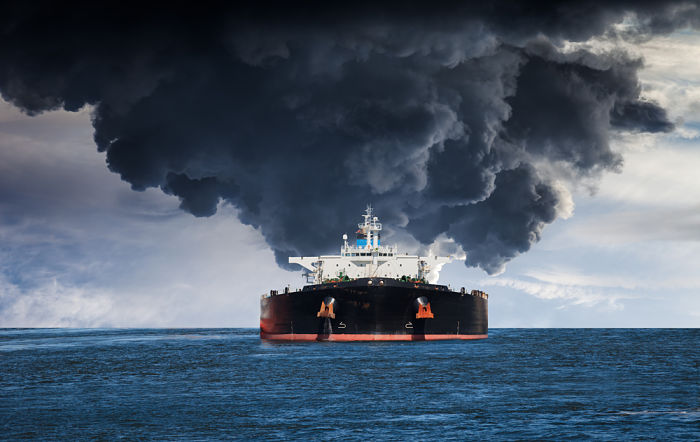
Basic terms used on tankers Flammability diagram flash point TLV Did you know a rich flammable mixture can ignite with just 1 Joule of energy ? If that does not surprise you yet, let me tell you how much energy we are talking about here. By just rubbing your hands with force for just one time produces 12 Joules of energy. Surprised ? When the ships started exporting oil cargoes, people were too afraid to sail on them. And those who sailed on them had to listen to something like You are sailing on a bomb, you never know when it is going to explode. And they were absolutely right about that. Back then there were no procedures and controls to mitigate the risks imposed by carrying flammable cargoes in bulk. Fast forward today and we have all the controls to avoid explosions on tankers. But irrespective of type of tanker and controls in place, explosions are always a concern. But what will be a even bigger concern is the people working on tankers not knowing about these controls and the basic terms used on tankers. Well I am sure we all have gone through basic and then advanced courses on tanker operations. But sometimes all that we are taught does not seems to sink in. In this post we will discuss 5 of the basic terms very commonly used on tankers. 1. Fire Triangle Ahh !! We all know what is fire ...

Join now to access this article and much more.

Admin has placed this article behind a paywall, making it accessible only with a paid membership, which offers numerous perks:

  • Contribute to creating a platform for reading and writing without ads.
  • Enjoy all content here, including exclusive articles for members.
  • Gain access to all exclusive articles for members.

Comments (20)

  • RAM August 8, 2016
    sir please correct the value of propane after UFL diagram.It has been previously shown as 2.3% after the UFL diagram mentioned as 2.5%.Correct me if i am wrong.
    1
    Rajeev Jassal August 9, 2016
    Thanks for pointing this out Ram..I have corrected this now..
  • Azeem August 10, 2016
    Hello captain. Came across this site just recently and already enjoyed reading the articles posted. Thank you for the knowledge and information sharing. Will wait for more good articles from you especially in passage planning and manoeuvring. Will there be a topic on interaction? :)
    1
    Rajeev Jassal August 11, 2016
    Glad you found it useful Azeem. Yes sure, I will write more on passage planning and Ship interaction.
  • RAM August 10, 2016
    sir kindly change the same propane value in FLAMMABLITY RANGE diagram (image file) also , sorry i din't mentioned this before.
    1
    Rajeev Jassal August 11, 2016
    Yes sure.. Thanks Ram..
  • Shardul Shinde August 11, 2016
    Dear Capt. Rajeev, Indeed very good information. Please keep writing as you really write well these articles. Keep up the good work.
    1
    Rajeev Jassal August 11, 2016
    Glad you found it useful Shardul..Thanks..
  • Marlon Mijares August 24, 2017
    Thank you for sharing your practical knowledge on this matter. Sir, I have a question. When measuring the atmosphere in the tank since the explosimeter has 2 sensor for HC, one by LEL & by Vol. Does it automatically come to % vol after reaching 100% LEL? Say for propane its 2.3%, after its reached 2.3 which is equal to 100%, will the explosimeter show 2.4, 2.5 and so on? Do we need to set anything for a particular gas say pentane has 1.5%?
    2
    Mohammad Asir August 25, 2017
    no
    Mohammad Asir August 25, 2017
    You have to adjust
  • mutale aaron March 27, 2018
    Kindly contact me on mutaleaaron@ymail.com havE some questions to ask.
    0
  • rahul kush April 28, 2018
    Awesome sir.. It was so easily explained. Noone can make us understand in such a better way!
    0
  • Kannan Ganesan February 20, 2019
    Hello Capt, I have read most of your blogs. ... You are spoon feeding Maritime knowledge to the seafarers .... Thank you so much to sharing your knowledge to us...Expecting more topics from you..
    0
  • Srinivasa Rao September 1, 2019
    Dear Captain, very lately only I started reading your blogs. They are very informative. I consider myself lucky to have found your blog. They clear many maritime related misconceptions and doubts. The way you put is really commendable, easy to understand methods with questions and examples. It takes real dedication and compassion to achieve this feat. You are doing a great service by giving back to the industry. Really proud of you Captain. Long live sir...
    0
  • Satnam Singh February 14, 2020
    Sir,hats off to you !Your method of explanation is superb !!. I was always doubful about the above but the way you explain is out of this world.I am a blended learning student for OOW & fInd your explanations quite helpul ! Your topic about inerting also got straight into my head instantly ! otherwise its very difficult to know with the help of books only.Keep the good work doing.Thanks a bunch !!
    0
  • Evgenii September 15, 2020
    Best regards from Russia Now I preparing again for interview and use your info
    0
  • Suresh November 8, 2020
    Great Work sir. Neat explanation
    0
  • Yash March 13, 2022
    Reson for the oxygen line being tilted?
    0
  • ALKESH J DEVALIA April 15, 2022
    Very good explanation sir i love reading your blogs...
    0
Capt Rajeev Jassal

About Capt Rajeev Jassal

Capt. Rajeev Jassal has sailed for over 24 years mainly on crude oil, product and chemical tankers. He holds MBA in shipping & Logistics degree from London. He has done extensive research on quantitatively measuring Safety culture onboard and safety climate ashore which he believes is the most important element for safer shipping.

More like this

In blog, Cargo Operation, Maritime Law

Different types of bill of ladings

There are different criteria on which bill of ladings can be defined and differentiated. Few of these criteria being the…

In blog, Marine Engineering, Shipping Business

Here is All You Wanted to Know About P&I Clubs

It’s Almost July of this year. What’s so special in July, you may ask. Naaa.. It’s not my birthday and…

In blog, Ship Safety & Security

Safety Culture on Ships: What are the ingredients?

Have you ever watched a cookery show where they teach you how to cook a dish? If you had your…

In blog, Ship Navigation

How to deal with Navigational warnings, A Complete guide

Most of the external agencies consider navigational deficiencies as most serious one. Not only because these can lead to accidents…

In blog, Marine Conventions, Shipping Business

A Simple Guide to Understand ISO 14001 in Shipping

This story is about a nice guy called Jack. Jack always understood his responsibilities towards the environment. He preferred bicycle over…

In blog, Ship Safety & Security

Risks Involved in Enclosed Spaces and How These Can Be Mitigated

When you see a casualty in a tank, do not rush and enter the tank to save him. Instead sound the alarm…