Get unlimited access to the best of MySeaTime for less than ₹100/week. Become a member

Members only

Radar plotting: How to do it and its Significance in Collision Avoidance

39
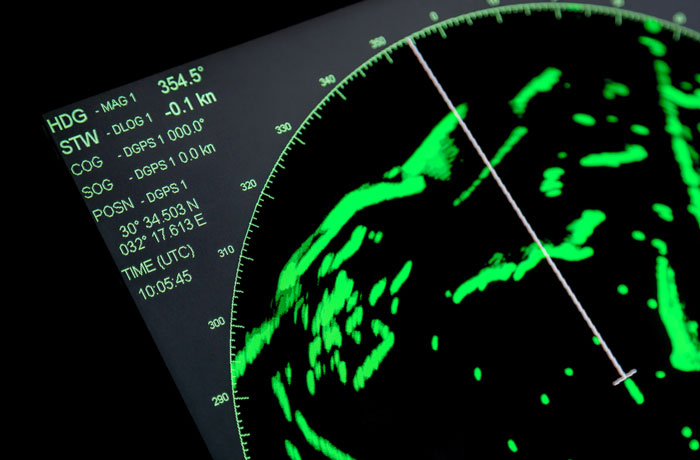
radar-plotting Have you been doing radar plotting? I know that the navigators get fed up with this irritating question during third-party inspections. And when the navigator is just about to answer that question with a Yes,  it's frustrating for them to find that there are no radar plotting sheets onboard. If this has happened to you too, then do not worry. It is not very uncommon sight these days. The reason some of us do not practice radar plotting is one or both of these. We do not think it would help us in any way We do not know how to do it In this post, I will definitely be discussing how to do radar plotting. But before we start on that, we need to agree on the point if all this is really required and is the radar plotting helpful to the navigators in any way. is Radar Plotting helpful? In one word the answer is "Yes". When and how? Well, radar plotting is an alternative for ARPA and thus it will be handy when ARPA is not working. Let us assume a very realistic situation. ARPA of one (or both) of your radars stopped working in the mid sea. Of course, the vessel is not complying with the SOLAS. Master will report the fact to the company and company will seek dispensation from the flag to sail and arrive at next port without working ARPA function of the radar.

Join now to access this article and much more.

Admin has placed this article behind a paywall, making it accessible only with a paid membership, which offers numerous perks:

  • Contribute to creating a platform for reading and writing without ads.
  • Enjoy all content here, including exclusive articles for members.
  • Gain access to all exclusive articles for members.

Comments (39)

  • Ankit Dubey May 15, 2018
    Very interesting sir ..It would be a great help if you can make a blog covering the various Collison prevention situations and their relevant action .Thanks a lot sir.. awaiting your positive feedback!!
    2
    Rajeev Jassal May 16, 2018
    Thanks, Ankit. I will surely write on that.
    FELIX June 11, 2019
    Good morning capt Rajeev please what can i do the question says while steering 242 at a speed of 10knot the following observations were made 1.Time 0527 Brg297 Rng 8.4 2.Time 0533 Brg 297.5 Rng 6.8 3. Time 0539 Brg 298 Rng 5.2 Determine the following 1. Speed and course of target 2. CPA TCPA and time to CPA 3. WHAT actions are expected from both vessels 4. if own ship stop at 0545 what is new CPA and time of CPA .
  • THANT ZIN May 17, 2018
    Dear Sir, Can I obtain CPA of a target while i only known range of target and vector is 30 minutes? If possible, please kindly answer.
    1
    Rajeev Jassal October 14, 2018
    It is two or more bearings of the target that is required to get the CPA.
  • Capt. Chander Vart May 19, 2018
    Another very well written article from you Capt. Rajeev. Shall be of great assistance to navigating officers.Keep up the good work.
    1
    Rajeev Jassal October 14, 2018
    Thanks Capt Chander...
  • ADELBERT PEREIRA May 22, 2018
    Very well wriiten capt jessal , pls keep up the good work
    1
    Rajeev Jassal October 14, 2018
    Glad you liked it...
  • Shahbaaz Ahmad May 27, 2018
    Well written post sir, whole funda of radar is cleared, thnx alott for a wonderful post.
    1
    Rajeev Jassal October 14, 2018
    Glad you found it useful Shahbaaz...
  • Boris Andreevich June 5, 2018
    Thank you Sir, very clear and interesting post, a lot of useful information.
    1
    Rajeev Jassal October 14, 2018
    Thanks Boris...
  • Mohammad Alriyati June 29, 2018
    Thank You So Much Sir, Best And Easy Way Ever I Had Been See.
    1
    Rajeev Jassal October 14, 2018
    Glad you liked it Mohammad...
  • naveen kumar July 20, 2018
    thank you sir it was very help ful
    1
    Rajeev Jassal October 14, 2018
    Thanks Naveen...
  • HARDIK JUNEJA November 1, 2018
    Thank you sir, explained in very easy and simple way. Great work.....
    0
  • Julius gabobga December 4, 2018
    Very interesting piece. thank so much
    0
  • Kevin December 24, 2018
    Thanks for the article, it has been very helpful. A question that has come up in my sample exams is: Question: after a bold alteration to starboard my new CPA is well over 3 Nm, how long do I need to hold this new course before I can return to my original course to maintain a CPA of 2 Nm. I really hope you can help me answer this question?
    0
  • Jeffrey Tuckerman February 26, 2019
    Thank you very much for this. I lost my radar plotting notes from college and wanted to revise it. This was perfect.
    0
  • Navjyot Singh March 20, 2019
    I have an exam in another 2days and i want to ask 3-4 questions to u regarding the ARPA. I have the pics of the questions too! It would be very appreciable if u can send me ur contact number sir!
    0
  • Dhir singh April 19, 2019
    Sir i always find your articles intersting. I want to correct you that here you denoted aspect 60 degree approx. but the correct aspect here is approx. 90 and exact value is 92.5 R. you have taken relative brng of target from our vessel but its relative brng of own vessel from target vessel. Thankyou sir for ur articles keep writing we find these very intersting.
    0
  • ravneet singh March 10, 2020
    Awesomely explained specially the aspect part, very stupendous effort.
    0
  • Kalyana chakravathy June 23, 2020
    Thank you sir you cleared all my doubts about radar plotting...
    0
  • milos June 30, 2020
    http://www.splashmaritime.com.au/Marops/data/text/Radartex/Radarplottex.pdf at least fix your example. the own vessel course given is wrong (045). no?
    0
  • machine learning course November 23, 2020
    Your work is generally excellent and I value you and jumping for some more educational posts machine learning course
    0
  • AnjiReddy December 28, 2020
    Thanks for sharing information, we are glad to read your Article in future we are looking forward to see more please keep sharing.https://fortune99homes.com/dm/fortune-smart-city-open-plots-in-shadnagar/
    0
  • Eugen BARSAN February 9, 2021
    First of all I want to congratulate you for your efforts to share practical knowledge in such a detailed way. After 25 years of teaching Radar Navigation, Radar plotting & use of ARPA at Constanta Maritime University I still can say that learning the use of ARPA without previously learning the basics of manual radar plotting is as been promoted from deck-hand up to OOW based only on years of on board practice without graduating any maritime school. Regarding the content of your article I just want to point something related to the practical use of target ship Aspect when you evaluate a traffic situation: • The fastest way to obtain the value of the aspect is by computing it (Asp = oppTB – TS Course) not by measuring the Aspect angle with the protractor. • The value of the Aspect is not very important. Important is the sign of the Aspect (Red or Green). Why? Because the OOW is analyzing mainly the close quarter situations (target ship(s) CPA is less than the safety distance). For these potentially dangerous targets the sign of the Aspect will show if the target ship is a Stand-On vessel or a Give Way vessel , as follows: • If the Aspect to an approaching target with a CPA smaller than the safety distance (ordered by the Master for that navigation area) is RED, than the target ship is a STAND ON VESSEL and our ship should manoeuver to avoid the dangerous ship • If the Aspect to an approaching target with a CPA smaller than the safety is GREEN, than the target ship is a GIVE WAY VESSEL and our ship should maintain course and speed (at least in the first stage of the encounter) This is the real IMPORTANCE of the Aspect. Regarding the analysis of the encounter between our ship and a dangerous target ship important is own ship true course and target ship true course, not the value of the Aspect. The OOW has to asses which are the type of encounter with the dangerous ship (crossing, head-on or overtaking). The encounter type in relation with COLREG Rules of the Road provisions are telling what the OOW will have to do if own ship is a Stand-On or Give-way vessel. That’s why the 1st thing that you have to draw on radar plotting sheet is the Own Ship Course (true). After plotting the observed positions to the target ship and determine the target ship true course it is easy to visualize on the plotting sheet how the target ship course line is interacting with the own ship course line and to define if it will be a crossing, head-on or overtaking encounter. It is the same way as you should proceed when you look at the ARPA radar screen and see the vectors of the plotted targets. You switch on TRUE VECTORS (if the ARPA radar is not already in TRUE MOTION mode) and assess how the true vectors of the plotted target are interacting (intersecting) with own ship heading line (ARPA radar working of course NUP or CUP). Hopping that I was not to boring I will rest here and wish you to continue to Keep Up the Good Work.
    0
  • Bandar March 29, 2021
    thanks from Saudi you are the best captain
    0
  • masters in data science May 4, 2021
    Hello there, I sign on to your new stuff like each week. Your humoristic style is clever, keep it up masters in data science
    0
  • masters in artificial intelligence May 25, 2021
    You re in motivation behind fact an on-target site administrator. The site stacking speed is amazing. It kind of feels that you're doing a specific trick. What's more, The substance is a masterpiece. you have done a marvelous development concerning this issue! masters in artificial intelligence
    0
  • masters in artificial intelligence June 15, 2021
    I am another customer of this site so here I saw various articles and posts posted by this site,I curious more energy for some of them trust you will give more information further. masters in artificial intelligence
    0
  • putu dharma yoga July 29, 2021
    COULD YOU PLEASE SHOW US THE INTERNATIONAL REGULATION WHICH TELLS US TO USE RADAR PLOTTING ON BOARD ?
    0
  • Herbert LOKO October 2, 2021
    Very well explained ! I always enjoy reading you. Thanks a lot.
    0
  • joham william March 3, 2022
    A mile is a unit of measurement that reflects how long it takes to travel 1,760 yards or 5,280 feet. There are 63,360 inches in a mile and there are 1760 yards in a mile.HOW MANY YARDS IN A MILE visit.
    0
  • Macauley Worika N November 18, 2022
    Explanation well cleared and understood, thank you very much.
    0
  • There April 17, 2023
    Awesome! Thank you for this essential information. I highly suggest this site also to introduce a foot solution, I hope you can gain more information. - https://calgarypodiatry.ca/
    0
  • OOW April 26, 2023
    Course & speed of targets by radar plotting As you mentioned: "Let us say your course is 045 degrees and speed is 12 knots. In 12 minutes your ship with speed 12 knots will travel 2.4 NM. SO from point “O” draw a line in direction 225 degrees and measuring 2.4 NM." Please check how did you draw 225 degrees line. I am affraid it is wrong.
    0
Capt Rajeev Jassal

About Capt Rajeev Jassal

Capt. Rajeev Jassal has sailed for over 24 years mainly on crude oil, product and chemical tankers. He holds MBA in shipping & Logistics degree from London. He has done extensive research on quantitatively measuring Safety culture onboard and safety climate ashore which he believes is the most important element for safer shipping.

More like this

In blog, Ship Navigation

How to know if the anchor is dragging ?

Provided the ship has enough provision, water and fuel, everybody loves time at Anchorage. Right? We all love having the…

In blog, Ship Navigation

5 Confusing Terms of Ship Navigation and its Clarification

If it wasn’t about safe navigation, no ship would reach its destination safely. But safe navigation is not only about steering…

In blog, Cargo Operation

The Most Comprehensive Yet Simple Guide of Static Electricity

Static electricity is kind of big deal on tankers. If you think it is just a hypothetical term, you would…

In blog, Marine Conventions, Ship Safety & Security

How to Have a More Successful Seafaring Career?

To this date, I have been in command for 10 years 6 months and 20 days. And with that experience,…

In blog, Ship Navigation

What are CATZOC and How to Use it for Passage Planning ?

When I had just started my sea career, I never understood how the depths of the entire ocean was measured.…

In blog, Ship Navigation

How to Handle Distress Messages Received on GMDSS

The strongest people make time to help others, even if they are struggling with their own personal demons. This saying is so…