


 152
152 
 We do so many things to make sure that ship owners get the maximum out of their investments on buying and running a ship.
We make sure that there are least constants on the ship, the ballast is pumped out to the last drop and many other things like these.
All this to make sure that we have the capacity to load maximum cargo and ship owner has a chance to earn maximum from it.
But while we do all this, sometimes we just fail to do the simpler things right.
Things as simple as cargo calculations.
This is something a chief officer cannot afford to do it wrong.
But here is the thing. It is sometimes difficult to get a hang of these calculations. There are so many tables to use and so many terms that float.
Sometimes it is difficult to understand which one to use and why.
But don't worry!!! This article would aim to simplify the cargo calculations on tankers.
Here we go.
Basics about Volume and weight
Before we proceed to the complex things, it is better to start with the basics.
Volumes and weights!!!
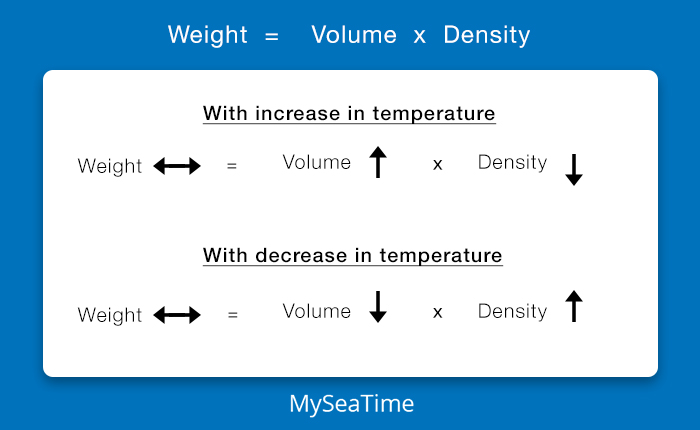
Volume changes with temperature but the weight remains the same.
We do so many things to make sure that ship owners get the maximum out of their investments on buying and running a ship.
We make sure that there are least constants on the ship, the ballast is pumped out to the last drop and many other things like these.
All this to make sure that we have the capacity to load maximum cargo and ship owner has a chance to earn maximum from it.
But while we do all this, sometimes we just fail to do the simpler things right.
Things as simple as cargo calculations.
This is something a chief officer cannot afford to do it wrong.
But here is the thing. It is sometimes difficult to get a hang of these calculations. There are so many tables to use and so many terms that float.
Sometimes it is difficult to understand which one to use and why.
But don't worry!!! This article would aim to simplify the cargo calculations on tankers.
Here we go.
Basics about Volume and weight
Before we proceed to the complex things, it is better to start with the basics.
Volumes and weights!!!
Volume changes with temperature but the weight remains the same.
Join now to access this article and much more.
Admin has placed this article behind a paywall, making it accessible only with a paid membership, which offers numerous perks:
- Contribute to creating a platform for reading and writing without ads.
- Enjoy all content here, including exclusive articles for members.
- Gain access to all exclusive articles for members.





Comments (152)