Get unlimited access to the best of MySeaTime for less than ₹100/week. Become a member

Members only

6 Basics That Will Make the Ship Stability Easy to Understand

49
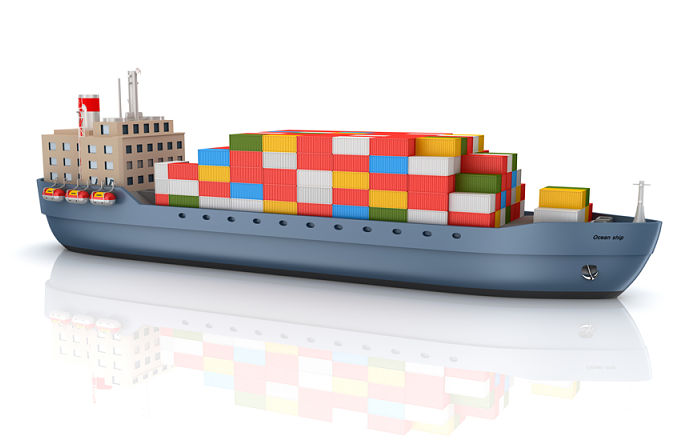
ship stability Like me if you too are not a naval architect, you and I don't know how to build a ship. But let us imagine we together built a ship. Or something looking like a ship. A smaller one may be. With all our efforts, we put this small ship in the water. What will happen? Will the Ship sink or float Will the ship tilt (list) on starboard side or port side Will the ship have any trim or not. If yes, will the trim be by the head or by astern? If I want to know the answers to these questions, one thing is for sure. We need to be able to understand the language of ship stability. But Let’s be honest: understanding ship stability can be a huge pain. Trust me, I know. But not if you know the basics of ship stability. Once you know these basics, all other parts of ship stability will be as easy as eating a pancake. And I am talking about most basics things here. Understanding these basics forms the foundation of ship stability. In this post, I will discuss 6 of these basic things of ship stability. Let us start. 1. Archemidies Principle Why does a small metal ball sink in water but not ship? Probably the first question that a Pre-sea cadet is asked during his training. While the question is quite basic, the answer forms the foundation of ship stability. The answer lies in the Archimedes principle. So what exactly is...

Join now to access this article and much more.

Admin has placed this article behind a paywall, making it accessible only with a paid membership, which offers numerous perks:

  • Contribute to creating a platform for reading and writing without ads.
  • Enjoy all content here, including exclusive articles for members.
  • Gain access to all exclusive articles for members.

Comments (49)

  • Vicky Alexander June 25, 2017
    Good cap. Appreciate yr sincere efforts in compiling subjects to make understand easier..very useful tools ..tx
    2
    Rajeev Jassal June 25, 2017
    Thanks, Vicky...
    himanshu sharma September 9, 2020
    Sir working on a tanker , a query how can we calculate SF & BM if loadicator is not operational .. bonjean curves but how to use them as I just know the theory abut the same but unable to find full explanation.
  • Manish June 27, 2017
    Hi Jas ! was here..
    1
    Rajeev Jassal June 27, 2017
    Thanks for reading Bro. I will mark your "present" :)
  • Amar Dubey June 28, 2017
    Very well explained Sir...tx
    1
    Rajeev Jassal July 2, 2017
    Glad you liked it, Amar...
  • mark foai September 7, 2017
    Thank you Capt Rajeev Jassal. Fantastic Explanaition. 5 Star
    1
    Rajeev Jassal November 17, 2017
    Thanks Mark...
  • Sandep November 2, 2017
    Really Appreciated your concept of explanation and making basic foundation strong and professionally understandable... Marine professional should get learning concept from you ..
    1
    Rajeev Jassal November 17, 2017
    Glad you liked it Sandeep...
  • david November 7, 2017
    I admire you capt rajeev jassal for your brief explanation. but let me ask you one question, suddenly if the ship can sink,is there any means the workers of that ship can escape ? or not?
    1
    Rajeev Jassal November 17, 2017
    Depends on how much time do they get.. best way of survival on ship is to keep it afloat...:)
  • Junjun November 20, 2017
    Thank you sir for the shared information. I salute you sir.
    1
    Rajeev Jassal November 20, 2017
    Thanks Junjun... Glad you liked it...
  • Gulbag Singh November 21, 2017
    From this can I consider that Condition for a body to float ie Upthrust force more than or equal to weight of the body
    2
    Rajeev Jassal June 10, 2018
    Absolutely...
    Abhimanyu November 6, 2018
    sir ,your blog is awsome. i too have chosen this field . at what age you did your mba ?
  • aleks November 21, 2017
    Many thanks for Your effort Captain.Realy usefully. Most cases the way of explanation by clever Person is more clear and understandable than it is written in book.
    0
  • Rahul Saxena December 12, 2017
    Please post for gyro and negnetic compass
    0
  • MOHAMMAD MOKTARUZZAMAN January 17, 2018
    DEAR CAPT. INFORMATIVE WRITING UNDOUBTEDLY.SIR,COULD YOU PLEASE EXPLAIN ME WHY WE MEASURE INITIAL GM IN 57.3 DEGREES.HOPE A EASY AND QUICK RESPONSE.GOD BE WITH YOU.THANKS IN ADVANCE.
    1
    krish April 3, 2019
    that is one radian =57.3 degrees
  • hassan February 20, 2018
    well presented . i really appreciate , ur compiling knowledge makes easier for me to understated
    0
  • Leo February 23, 2018
    Excellent presentation.
    0
  • krunal February 27, 2018
    nice and clear explained.what factor drives to increase or decrease byoncy force?
    0
  • Alex April 14, 2018
    Thanks Capt. Very useful.
    0
  • pawan May 14, 2018
    sir when a ship is heeled at port or sea why the side on which the ship is heeling thatside tanks are filled first?
    1
    MANU ARAVIND July 22, 2020
    This i done as filling the tank which is on low side brings down the COG and hence make it more stable. If the tank on high side is filled first, the ship will have a tendency to list onto that side which will again have a counter tendency to make it upright. (ie. Stiff ship, Rolling to and fro too fast is not desirable). Filling lower tanks at first makes it more stable and subsequently opp. tanks to be filled to bring her upright)
  • Lionel fernandes May 15, 2018
    Thank you sir
    0
  • maged slman June 18, 2018
    Thank you very much captain,I have been much time trying understand the meaning of stability accurate but no result due to we no have academy in my country,but during your fine explaining I started slightly understand no due nuclear explain but because of English language,I can not say but much thanks for you.
    0
  • Joeleboat August 9, 2018
    Im cptn Joeleboat i built a new kind of boat, a Banoemaran cross between a boat a canoe and a katarmaran, oh yeah
    0
  • Swabby February 2, 2019
    Thank you.
    0
  • S.Thirumalar kannan February 20, 2019
    Awesome explanation
    0
  • Ronald Keith Sainsbury March 15, 2019
    Unfortunately this is not a good explanation as it fails to clarify that the COG must be below the COB to keep the ship stable and stop it keeling over. The ilustrations show the COG above the COB and this is 100% wrong.
    1
    Cheng September 11, 2022
    Cpt Jassal, is the above comment accurate?
  • Godson Berly April 22, 2019
    I need tution for stability...
    0
  • Kyaw Kyaw Win June 24, 2019
    Thanks for your great lecture. I would like to know how to calculate the stability if you can help.
    0
  • Nehemiah Jaramillo September 4, 2019
    Can I draw the ships
    0
  • ademola adeshina December 13, 2019
    thank you ver much sir, very much interesting . please im tasked to do a stability calculation for a ship, please i need ur assitance sir, can i private chat or i send the full question here sir
    0
  • Obi kenechukwu January 19, 2020
    Comment*sir, assist me with several calculations on ship stability.
    0
  • AMAR ANAND April 23, 2020
    great article....
    0
  • Harjinder Singh May 9, 2020
    Thanks sirjii
    0
  • Benjamin Scott May 27, 2020
    Excellent
    0
  • Austine Bunya July 17, 2020
    Thanks You capt... explanations 5 stars.
    0
  • shrey February 16, 2021
    thanks for this sir, can i expect explanation on equilibrium of ships.
    0
  • Marine Services in UAE August 24, 2021
    Fremontmarine provides the best marine services in UAE Our Company offer quality safety survival systems that enable companies freedom at sea onshore
    0
  • Akhil November 25, 2021
    Good day Captain, Please can you explain a condition where the ship heels to the same side of turn?? where basically the KB is more than KG. please can you explain this
    0
  • JUN January 23, 2022
    Highly recommended to share your blogs.
    0
  • Gentle boy June 9, 2022
    For finding Distance between any two ports, there is an app: Port To Port Distance
    0
Capt Rajeev Jassal

About Capt Rajeev Jassal

Capt. Rajeev Jassal has sailed for over 24 years mainly on crude oil, product and chemical tankers. He holds MBA in shipping & Logistics degree from London. He has done extensive research on quantitatively measuring Safety culture onboard and safety climate ashore which he believes is the most important element for safer shipping.

More like this

In blog, Marine Conventions

Here is What You Need to Know about Enhanced Survey Programme

The way ships are maintained has changed since last decade or two. Rarely will it happen that a seafarer completes…

In blog, Marine Conventions, Ship Safety & Security

A Guide to transit through Gulf of Aden and Somalian waters

If you think the piracy and hijacking in the Gulf of Aden is dead now, you need to think again. Yes,…

In blog, Cargo Operation, Maritime Law, Shipping Business

A Layman’s Guide to Laytime, Charter party Agreement and Voyage Charter

The word “Charterer” is probably as old as the word “Ship” itself. Do you keep hearing this word so regularly?…

In blog, Marine Conventions, Ship Navigation

COLREGS Rule 2: Here is the Simple Explanation to the Most Confusing Rule

Collision regulations are the bible for the navigators. This is the area onboard that do not distinguish between a fresh…

In blog, Cargo Operation

A Basic But Helpful Guide On Framo System

I recently met a 3rd officer. I had a conversation with him about less number of jobs these days for junior officers.…

In blog, Marine Conventions

A basic and simplified guide of Hague Visby rules for seafarers

Let’s play a game. This game is between me and you. You are the shipper and I am a ship…