Get unlimited access to the best of MySeaTime for less than ₹100/week. Become a member

Members only

A Complete Guide to Understand Damage Stability Better

48
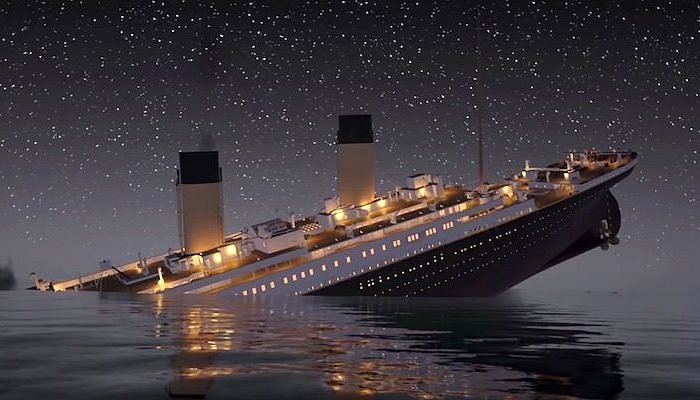
understanding damage stability Have you been breaking your head to understand damage stability? Not only this topic is difficult to understand, it is boring too. I know and I understand. But boring topic cannot be the explanation of not knowing what we ought to know in the real world, on the high seas. In 2010, Paris MOU and Black Sea MOU carried out a concentrated inspection campaign on tanker damage stability. At the end of this campaign, Pat Dolby, co-ordinator of this CIC commented, The most significant finding from the campaign was that 16.2% of tankers that were inspected, the master could not demonstrate that the ship was complying with damage stability.  16.2%. That is a huge number that definitely shows that there is a void in understanding this topic. So today, let us discuss and demystify this topic of damage stability. Why damage stability? Do you remember that scene from the movie "Titanic", where after the ship hit the iceberg, the naval architect lays down the ship's plans in front of the captain? While he was trying to brief the captain about the situation, the captain just had this one question. How much time do we have? titanic sinking da...

                        <div class=

Join now to access this article and much more.

Admin has placed this article behind a paywall, making it accessible only with a paid membership, which offers numerous perks:

  • Contribute to creating a platform for reading and writing without ads.
  • Enjoy all content here, including exclusive articles for members.
  • Gain access to all exclusive articles for members.

Comments (48)

  • INDRANIL RAY July 9, 2017
    Wonderfully explained sir, I wish many more various topics from you as you always do the explanations in very different ways,example based, thanking you
    1
    Rajeev Jassal July 19, 2017
    Glad you liked it Indranil...
  • Avinash Nayak July 19, 2017
    Great explanation Sir...It cleared the concept regarding damage stability and how to calculate. Kindly advise, how we will know whether the ship is constructed as per probablistic method or deterministic method?
    1
    Rajeev Jassal July 19, 2017
    Ships are built as per the requirements of SOLAS chapter II. The damage stability requirements in SOLAS chapter II are based on probabilistic approach. However, the oil tankers, chemical tanker, and gas tankers are required to be built as per the requirements of MARPOL Annex I, IBC Code and IGC code respectively. These damage stability requirements are based upon the deterministic approach.
  • Anant July 22, 2017
    Appreciate your effort sir, kindly advise if cross flooding arrangements is only for passenger vessel or for cargo vessel also, and when is it required, which tanks should have this arrangements, TIA.
    2
    Rajeev Jassal July 29, 2017
    Cross flooding arrangements are applicable for passenger ships though it is not compulsory. Passenger ships just need to comply with the damage stability requirements as I have discussed in this post. Having cross flooding arrangements increases the chances that passenger ship would comply with the damage stability requirements. For the areas for cross flooding, it is the decision of the ship owner and naval architect designing the ship. For example, considering no cross flooding arrangements the passenger ship might be failing one damage case (Say damage to No 4 compartment) for damage stability requirements. By having cross flooding arrangements for No 4 compartment may cause the ship to comply with the damage stability requirements for this damage case. Or shipowner may choose to have the cross flooding arrangements for the entire length of the ship. If the ship complies with the damage stability requirements without cross flooding arrangements, they may choose to not fit the cross flooding arrangements. The only requirement is to comply with damage stability, with or without cross flooding arrangements does not matter.
    Anant Batra July 29, 2017
    Thanks for clarifying that sir.
  • Harsh vardhan Anand July 29, 2017
    I am going for my mates written exam next week. It is a very nice explanation. Found it very helpful. Is there any other platform where i could contact you to clear my doubts in future ?
    1
    Rajeev Jassal July 29, 2017
    Glad you found it useful Harsh... If you have any question you can post it on our SEAQA section, this way fellow seafarers can also benefit from your questions and the answers to those questions. Alternatively, you can send me an email at support@myseatime.com. On average I get 10-15 emails a day and sometimes there isn't enough time in a day to respond to all of them but I try my best.
  • Anurag August 5, 2017
    If loadicator is not working how I will ascertain that on departure the tanker vessel is complying with damage stability requirements
    2
    Rajeev Jassal August 5, 2017
    We need to check the KG curve in the damage stability booklet. The curve plotted with KG on one axis and draft on the other axis. We need to take our draft and see the maximum KG allowed from the curve. Ship's actual KG should be less than this value. On many ships (specially the old ships) this KG curve may not be there. Owners need to contact Yard and ship's class for these curves.
    Anurag Choudhary August 5, 2017
    Thanks a lot sir!!
  • Daniela August 5, 2017
    Thanks so much with your explanation ...I study naval architecture ...I have a question about how to calculate the floodable lentgh in theory form ...I know a method of iteration but I don't undertand how to start ..I need to asum the draf, the trim ...if you know a reference that explain that I would apreciate it!!!
    0
  • SAJJAD MODAK August 23, 2017
    Many thanks for your efforts ,all topics covered are very informative & easy to understand to prepare for CoC exams
    0
  • Capt.S.S.Gupte October 15, 2017
    Hello Sir, one clarification? I am on a PCC.We never get a ballast voyage.Now we have about 2 days of ballast voyage.And we need to finish the tank inspections.Now on the loadicator there are three criterias for GM, i.e.IMO ,company requirement and DMG.When I have pumped out 4 tanks together ,which I have to ,because they are interconnected.Then do the inspection.I am getting GM 2.25 m ..thats fine, IMO GM is also OK i.e 2.20 m ,but DMG min required its showing 2.28 m ..and an alarm.What am i missing here?? am i okay to pump out and do the inspection?
    0
  • siddharth gaur December 29, 2017
    How can the trim affect gz curve.Can deck edge immersion be counted for that too.
    1
    PRADEEPKUMAR KARAYIL July 28, 2021
    Generally in eralier days, we used to assume (for simplicity) that the Trim is constant while inclining to port/stbd,. Actually trim varies w.r.t. heel. to account for this we have trimmed hydrostatics and KN curves (stability cross curves) for all the operational trims. GZ can go up if the waterplane area of the ship is more in the trimmed conditions.
  • Sudhanshu February 2, 2018
    Very Well explained sir... Nw I hv a clear vision abt this topic..
    0
  • AJAY KUMAR March 3, 2018
    Mind blowing sir, i wish if u keep on posting blogs like above.
    0
  • Philipp Doublep May 23, 2018
    Thank you for explanation! Could you clarify, what actions should be undertaken to improve damage situation?! How does it relate with damage stabilty booklet?!
    0
  • Rishikesh singg June 11, 2018
    Sir kindly tell me ...what is worst case of damage stability and where i can find li in damage stability booklet. ?
    0
  • jayasankar June 20, 2018
    Thank you for your explanations. Kindly advice how can be find out the worst case in the damage stability cases as listed in the booklet.
    2
    marlon August 29, 2019
    where you able to find the answer? i hope this question will be answered as not all damage stability booklet is stating this.
    Rajeev Jassal August 29, 2019
    I have just posted an article that answers this.. check it out...
  • Pushkar Julka June 28, 2018
    Very beautifully explained and in very easy words. Thanx for your efforts sir.
    0
  • Anurag Tiwari October 8, 2018
    Thanks a lot SIR......!!!!
    0
  • Rahul Raghuram October 31, 2018
    Sir. How is the subdivision loadline related to floodable length on passenger ships?
    0
  • Gaurav November 4, 2018
    There is one question asked in orals - which is the worst damage stability condition?
    0
  • MD Ashif Imran April 12, 2019
    Great sir. Wish fr ur best reward
    0
  • ROHIT June 15, 2019
    Explained very nicely and in detail. Thank u very much Sir for sharing such needful knowledge.
    0
  • Kumar June 30, 2019
    Thank you for your Great concepts! Excellent tips for mariners.
    0
  • Nitin July 7, 2019
    Dear Sir, pls note all vessels have cross flooding arrangements not only passenger ships. WBT's considered as cross flooding arrangements as ballast could be transferred internally in case of flooding.
    0
  • Anil July 25, 2019
    Sir in tankers how to determine the worst case damage stability as being always asked by vetting inspectors
    0
  • Andrew September 2, 2019
    What i have to understand is : in the Curve of Floodable Lenght and Probabilistic Assessment the damage stability criterias are dealt on the stage of construction so it depend only how we construct the ship. Why in the deterministic method the Officer shall check this requiriments if they depends from the construction of the ships same like the first 2 methods? thank you
    0
  • Govind Prabhakumar November 27, 2019
    Sir, very nicely explained. Thanks a lot for your initiative
    0
  • Dimensional Inspection of Storage tank January 13, 2020
    Dimensional Inspection of Storage tank Calibration Services from EIWAA Group help avoid systematic storage losses on shore or at sea. Find out more
    0
  • AMAR ANAND April 23, 2020
    once again....a great article sir
    0
  • jatin June 21, 2020
    what is factor of subdivision? how its calculated?
    0
  • Captain Subrata Kumar Bose July 30, 2020
    Excellent
    0
  • giovanni October 7, 2020
    Very nice explanation! clear and easy to understand. It will be very useful for the CoC exam i will do next week :). Anyway, I have a question regarding Subdivision loading: as per SOLAS cp. II - 1a, passenger ships and roro can have subdivision loading depending on the different condition of the load (C1, C2, C3,etc...). This loading is calculated from the compartment factor, floodable length and service factor of the ship. Anyway, I really can't understand what this line means: first of all is the subdivision load line corresponding to the margin line (76 mm below bulkhead deck)? second of all, as per SOLAS, the subdivision load line shall NOT, in any case, be ABOVE the deepest saltwater load line calculated for that season as per LLC. How can it be that a subdivision load line is, theoretically, under a North Atlantic load line? wouldn't it means that in case of submerging any deeper than the subdivision line, the ship will sink? with this point of you should be impossible to load the ship any deeper than the C1, not even mentioning that Tropical water and freshwater load line would be never reached. I hope to have been clear enough with my question. Thank You
    0
  • deepak kumar sahu October 10, 2020
    thanks for the explaination.It is very helpfull in understanding damage stability. In case of probalistic approach ,how the probability will be calculated.Who will calculate the probabality.Is any other requirement in bulk carrier regarding no. of bulkheads assumption or final damage stability criteria at equilibrium.
    0
  • Ali poori December 22, 2020
    Dear sir Tnx for your valuable articles. Can you please furnish us with "how to use of tables of a specific ship, what to check, why some cases are some not" where loading condition are used against damage cases at initial and equilibrium condition
    0
  • Rajesh R February 12, 2021
    Very nicely explained sir...my query is that whether the above method is applicable for warships...
    0
  • MOHANDAS PALAKKULANGARA August 3, 2021
    Wonderful explanation Sir. My concept is clear. Thanks
    0
  • PURU August 17, 2021
    What will be the damaged stability criteria for bulk carriers....Will it be as per Regulation 27 of the load line convention??
    0
  • mihir October 20, 2021
    Sir the flooding graph is drawn on a graph using the lenght of floodable compartment then how do we determine whether the ship will withstand the flooding of the compatment by super imposing the graph on the vessels length using the same compartment length ? each time the length of the compartment should touch the graph since same length is used to draw the graph
    0
  • ZAHIRI ISAAC April 18, 2022
    the magic of internet, once you post something it remains several years after and help fellows who are going through the same difficulties later one. thank you sir, explanations clearly made and well illustrate. Thank you.
    0
  • Prem Prakash April 29, 2023
    Thanks for the great article. Can you please advise if damage stability criteria should be met at all times including while entering and leaving port or only at sea during ocean passage. Basically can vessel sail out and take ballast in DB tanks to increase GM to meet the damage stability criteria?
    0
Capt Rajeev Jassal

About Capt Rajeev Jassal

Capt. Rajeev Jassal has sailed for over 24 years mainly on crude oil, product and chemical tankers. He holds MBA in shipping & Logistics degree from London. He has done extensive research on quantitatively measuring Safety culture onboard and safety climate ashore which he believes is the most important element for safer shipping.

More like this

In blog

Why Captain’s cabin is always on starboard side ?

There are many questions in shipping industry which seem to be mysteries  of the ancient shipping times with as many…

In blog, Ship Navigation

Speed Through water or speed over ground, Which one to use ?

When it comes to speed over water vs Speed over ground, many of us get confused. May be, it is…

In blog, Cargo Operation

A complete guide of loading TDI onboard a chemical tanker

TDI is the short form for the toluene Di isocyanate. Loading, carrying, and discharging this cargo is not a child’s…

In blog, Ship Safety & Security

The Ultimate Actionable Guide of Anchoring a Ship

Anchoring is as frequent operation on board as loading and unloading a cargo. But in spite of being a frequent…

In blog, Marine Conventions

How an IMO convention enters into force and how it is amended ?

One thing that no seafarer can avoid is to not to deal with IMO conventions. IMO conventions run the shipping trade.…

In blog, Ship Safety & Security

Infographic: How to Wear SCBA in Correct Way

SCBA (Self contained breathing apparatus) is an important equipment on board. We may not get to use it frequently but…