Get unlimited access to the best of MySeaTime for less than ₹100/week. Become a member

Members only

8 simple Mistakes Navigators make while using Traffic Separation Scheme

14
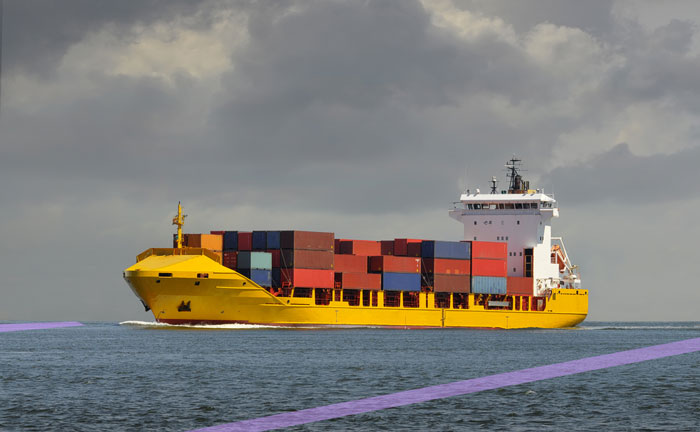
Traffic-separation-scheme Next time you are navigating in the Singapore Strait, just imagine if there was no traffic Separation scheme in that area. Or imagine crossing the Dover Strait without the presence of any Traffic separation zone. It would be chaos. The increase in accidents would be many folds. And you would say Hell no, it is so difficult to navigate with TSS in these areas, leave alone navigating without TSS. I could not agree more. There are 205 plus Traffic Separation Schemes adopted by the IMO which suggests that even if you have been sailing for only a couple of years, you would still have been in a TSS. But if you have not then let me clear the air right away. The purple zones and line that you see for TSS are only the imaginary lines drawn on the chart and you won't find these marked on the sea water as your chief officer might have asked you to look for. TSS makes the navigation a little easier but that also brings complacency that leads to seafarers making simple mistakes while using TSS. Don't trust me? Then hear this. In 2017 alone, there have been a number of major collisions in the TSS. One of those was the infamous collision between MSC Alexandra and the Dream II in Singapore Strait.

Join now to access this article and much more.

Admin has placed this article behind a paywall, making it accessible only with a paid membership, which offers numerous perks:

  • Contribute to creating a platform for reading and writing without ads.
  • Enjoy all content here, including exclusive articles for members.
  • Gain access to all exclusive articles for members.

Comments (14)

  • CPT.ADELBERT PEREIRA July 31, 2017
    VERY WELL EXPLAINED CAPT.JASSAL
    1
    Rajeev Jassal August 1, 2017
    Thank you, Capt Pereira...
  • Rajesh Raveendran August 5, 2017
    Useful explanation.I will use these technique next time.Thank you captain
    1
    Rajeev Jassal November 17, 2017
    Thanks Rajesh... let me know if these helped during actua use onboard...
  • James October 5, 2017
    Hi Sir, is the precautionary area part of TSS? do we have to comply with rule 10? As far as what I have found out Precationary area, two-way route and deepwater routes arent considered TSS. and also rule 10 applies to only IMO approved TSS. Please enlighten me. Thank you.
    0
  • Ankit duey April 13, 2018
    Hello sir ... As you said we should take action in TSS considering the action which we will take outside TSS as the rule does not give any right of way.. But as per rule 10(i) and 10(j) vsl less than 20 metres in length , sailing vessel and fishing vessel should keep clear of a power driven vessel following a traffic lane, no matter the target is on which side . ??
    1
    capt singh May 26, 2018
    its says shall not impede the passage or safe passage , which is different from keep clear, so responsibility still exist on PDV in ROC as per rule 18
  • Lav Gupta September 5, 2018
    Thank u Sirr.....so useful for me...as well as others.....once again a lot of thanks!!!
    0
  • Ardee July 13, 2019
    Ayay capt! Many thanks for explanation! Wish me luck for my next contract as a 2nd Officer!
    0
  • Dinesh kumar SHEORAN July 20, 2019
    Hello sir i have an question , how to recover a person falling overboard in a TSS?
    1
    Thomas Varghese May 18, 2020
    You can deviate from COLREGS for the purpose of saving a Life. Transmit PAN PAN PAN. If you are in the process of recovery then you can put up RAM and complete the recovery. Ofcourse carrying out a search (pattern) will be increasingly difficult with surface vessels. You will need shore assistance for deployment of rescue helicopters. I have witnessed search patterns and Navtex warning for man over board in English channel.
  • Capt. Thomas Varghese May 18, 2020
    Captain Jassal Good job Summarizing these points. It might be useful for the bridge team on a vessel calling busy TSS areas to discuss these points in a bridge team meeting prior the transit.
    0
  • Himanssu Mohan November 4, 2020
    What will be better course in first diagram to minimise crossing traffic from bow when westbound? You have nicely given better course to follow in later diagram to avoid crossing traffic when eastbound proceeding for pilot station
    0
  • Sanjay September 26, 2021
    Very nicely explained with example charts. Thank you sir,
    0
Capt Rajeev Jassal

About Capt Rajeev Jassal

Capt. Rajeev Jassal has sailed for over 24 years mainly on crude oil, product and chemical tankers. He holds MBA in shipping & Logistics degree from London. He has done extensive research on quantitatively measuring Safety culture onboard and safety climate ashore which he believes is the most important element for safer shipping.

More like this

In blog, Ship Navigation

8 COLREG rules every navigating officer must understand

I still remember the condition that was put by our first chief officer for us to enter wheelhouse and keep a watch…

In blog, Ship Navigation

Radar plotting: How to do it and its Significance in Collision Avoidance

Have you been doing radar plotting? I know that the navigators get fed up with this irritating question during third-party…

In blog, Ship Navigation, Sight Basics

How a Marine Sextant Helps in Getting Ship Position ?

In the age of Google maps, GPS and AIS, there is something in the wheelhouse that looks so outdated. I am…

In blog, Ship Navigation

A step by step guide to ordering and correcting charts on ECDIS

Many believe ECDIS has changed the way we navigate our ships. Rightly so, after all we see our ship all…

In blog, Marine Conventions

York Antwerp Rules and General Average, Everything you Need to Know

It is not uncommon these days for people to share the spendings of a group equally. For example, for a…

In blog, Cargo Operation, Marine Conventions, Ship Safety & Security

Ballast Water Management: What We Need to Know and How to Comply

Is anyone having deja vu? Every time a new regulation is in force, companies, and seafarers inevitably wonder if this…