Get unlimited access to the best of MySeaTime for less than ₹100/week. Become a member

Members only

Cargo Calculations on Tankers with ASTM Tables: Here is all you need to know

152
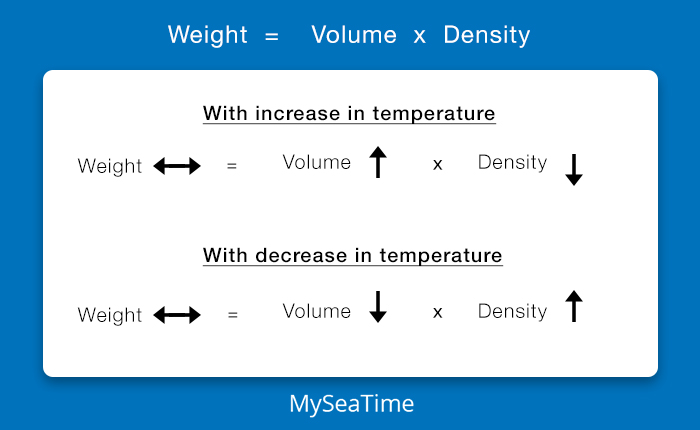
cargo-calculations-with-ASTM-tables We do so many things to make sure that ship owners get the maximum out of their investments on buying and running a ship. We make sure that there are least constants on the ship, the ballast is pumped out to the last drop and many other things like these. All this to make sure that we have the capacity to load maximum cargo and ship owner has a chance to earn maximum from it. But while we do all this, sometimes we just fail to do the simpler things right. Things as simple as cargo calculations. This is something a chief officer cannot afford to do it wrong. But here is the thing. It is sometimes difficult to get a hang of these calculations. There are so many tables to use and so many terms that float. Sometimes it is difficult to understand which one to use and why. But don't worry!!! This article would aim to simplify the cargo calculations on tankers. Here we go. Basics about Volume and weight Before we proceed to the complex things, it is better to start with the basics. Volumes and weights!!! Volume changes with temperature but the weight remains the same. weight-volu...
                        <div class=

Join now to access this article and much more.

Admin has placed this article behind a paywall, making it accessible only with a paid membership, which offers numerous perks:

  • Contribute to creating a platform for reading and writing without ads.
  • Enjoy all content here, including exclusive articles for members.
  • Gain access to all exclusive articles for members.

Comments (152)

  • Ivan September 23, 2018
    Great article sir. Thanks for sharing ur knowledge. More power Sir! Always waiting for more articles.
    6
    Rajeev Jassal October 7, 2018
    Glad you liked it Ivan...
    Hemant July 28, 2020
    Sir, could you please explain how should I use ASTM Table 54C for getting ethanol density corrected to 15C?
  • Anthony George Johnny September 25, 2018
    Thank you sir, for explaining complicated topics in such a lucid manner, its an art ...
    3
    Rajeev Jassal October 7, 2018
    Thanks Anthony...
    Matti Näsi April 9, 2020
    Hi Rajeev. Its seems to very hard to get correct excel formula to calculate correct VCF ASTM Tab 54A. I have crue oil density 0,9616 and 42, 25 degC and VCF should be 0,98214 but my formula gives much less. DO you have a correct formula to calculate correct VCF. In my formula I have a factor 613,97226. Is this correct? My email: mattijnasi@gmail.com
  • Boris September 26, 2018
    Really useful!! Many thanks!
    1
    Rajeev Jassal October 7, 2018
    Glad you found it useful Boris...
  • Amit Yadav September 26, 2018
    Very nicely explained sir. Thank you very much for your kind effort for explaining cargo calculation in a very simple language.
    1
    Rajeev Jassal October 7, 2018
    Thanks Amit...
  • Jorge Belalcazar Cardona September 29, 2018
    this information is very helpful for us master / tanker officers .. Pls next how to calculate : Vapour weight in LPG....Thanks, Capt. Rajeev Jassal.
    1
    Rajeev Jassal October 7, 2018
    Glad you found it helful Jorge.. Will try to write on similar topic for LPG.
  • carlos October 12, 2018
    very good Capt. Rajeev Jassal Thanks
    1
    Rajeev Jassal October 14, 2018
    Thanks Carlos...
  • Tun October 18, 2018
    very useful..many thanks Sir,
    1
    Rajeev Jassal February 16, 2019
    Glad you found it useful..
  • bigshoutoutfromsouthkorea October 24, 2018
    first of all, thanks for the explanation . but what i wanna ask u is .. does the air buoyancy exist? it sounds silly but it's hard to understand the concept of air buoyancy . my question roots from the cargo calcualtion report from our lab . there is two different figures for the same LNG cargo, M/T(Vac), M/T(air). i thought how weight of the same cargo chage with conditions such as vac, air , other than gravity. and i read ur article and still i'm like ... really? air buoyancy?? even in the tank??? so if u don't mind , could you elaborate this part or give me some examples?
    1
    Rajeev Jassal February 16, 2019
    Yes.. Air buoyancy do exists...It is same as how the same ship would weigh more in waters of different densities...each medium (including. Aur) offered some resistance and thus the buoyancy..
  • Capt. Pushkar October 30, 2018
    Good day Capt. Rajeev, Above well explained. Just wanted to know one thing how calculations are performed on chemical tankers. Different manufacturer may have different densities for same chemical. This is true especially for vegetable oils (Correct me if I am wrong). So how these calculations are performed on chemical tankers???There are no standard tables for chemicals.
    1
    Rajeev Jassal February 16, 2019
    For most chemicals.. the density table is provided by load port surveyor.. this density table have the densities for each degree of temperature.. the density of temperatures in decimal places is calculated by interpolations... as you right said, densities for the same chemical from different manufacturers usually change differently with change in temperatures, so we do not have anything like API tables for chemicals.
  • Lai h November 2, 2018
    Hello, How are you ? Can you send me the format in EXCEL of working ship GM. Thanks a lot
    0
  • Suvasmit Chatterjee November 9, 2018
    Sir, when finding VCF from table 54B, the density to be used should be in Air or Vacuum?
    1
    Aleck March 1, 2020
    Density in vacuum
  • Krishna kumar November 10, 2018
    All of your blogs did a vast contribution to pass my orals exam from uk in my first attempt...Thank you verymuch sir
    1
    Rajeev Jassal February 16, 2019
    Glad to hear that Krishna...
  • Sarath M December 25, 2018
    Really helpful sir, I am preparing for Ch Mates phase I exams ans as I am from a dry cargo background, this artice really helped me out. Thank you so much for sharing your knowledge in such a simple manner.
    1
    Rajeev Jassal February 16, 2019
    Glad you found it useful Sarath...
  • bharat December 26, 2018
    Thankyou sir , very well explained in simple words with deep explanation. This is the reason "Albert Einstein Quotes. If you can't explain it simply, you don't understand it well enough"
    1
    Rajeev Jassal February 16, 2019
    Thanks Bharat... and that’s one of my fav quotes too..
  • maik December 28, 2018
    Your work is greatly appreciated, Sir! Thanks! wish u healthy and happy!
    1
    Rajeev Jassal February 16, 2019
    Thanks Maik...
  • Ahsanul Karim Ahsan January 6, 2019
    Appreciate your blog.
    1
    Rajeev Jassal February 16, 2019
    Thanks Ahsanul...
  • M. Ahsanul Karim Ahsan January 6, 2019
    Fyi after loaded 12964.034 MT RBD Palm Olein at Belwan Port one of small tanker vessel draft F/8.90M A/8.90M and when she came at Chittagong Port made vessel trim F 8.10M Aft 9.10M but port pilotage requirement is 0.20M by stern trim. According to ullage at berth in Chittagong Port with draft F/8.10M & Aft 9.10M cargo found 12963.543 MT as same as load Port qty of 12964.034 MT. but after discharged into shore tank cargo found 12935.589MT i.e 27.954MT short than the berth ullage 12963.543 MT. Would you please comment how it can be possible to checked the shortage?
    1
    Rajeev Jassal February 16, 2019
    There could be many reasons such as the ship’s tank not calibrated well in the delivery yards.. slight bending of the bulkheads during the age of the ship and sometimes even the shore using the density that they got after analysis of cargo received in shore tanks. Irrespective of the reasons, vessel is not concerned about how much cargo shore received. Ship goes by the figure on the ship and on any protest presented to the vessel, vessel must remark it as “for receipt only, vessel not responsible for anything beyond ship’s rail”.
  • Nandan January 10, 2019
    This Is how to explain ...god bless you sir ..everything we need to know and how to apply you have explained in such a way .thanks a lot sir thanks a lot.
    1
    Rajeev Jassal February 16, 2019
    Thanks Nandan...
  • John January 22, 2019
    Fantastic. As expected, very well explained. Thank you sir for help us junior officers to further our knowledge as aspiring Chief Officers.
    1
    Rajeev Jassal February 16, 2019
    Glad you found it helpful John...
  • ABO SAMIN January 27, 2019
    was really clear and easy to understand ,thank you too much sir,
    1
    Rajeev Jassal February 16, 2019
    Thanks Abo...
  • sachin jaiswal January 28, 2019
    thanks a ton sir.things have simplified now and better to understand
    1
    Rajeev Jassal February 16, 2019
    Glad to hear that Sachin...
  • Casimer Quadros January 31, 2019
    Thanks for this knowledge and experience based article which I was searching for long time. Hope more articles on LPG and other products will be shared. Thanks once again.
    1
    Rajeev Jassal February 16, 2019
    Glad to hear that Casimer...
  • Vladimir February 14, 2019
    You can find information about different software for calculation of quantities for ship and shore side for Oil, LPG in Metric units and US customary units, for ship's side for LNG in metric units, for chemicals in Metric units, an oil blending program in Metric units and US customary units, a draft survey on the following websites: http://surveycalc.com and http://oilcalc.com All this software is based on the latest ASTM, ISO and API standards.
    0
  • Anushka February 19, 2019
    Do we have to use same procedure for to calculate loadable quantity. At once we receive commence new charter.
    1
    Anglo Eastern Ship Management (India) Ltd May 4, 2019
    Loadable quantity is calculated by deadweight calculation. There is no need of use of ASTM tables for that...
  • Neil February 20, 2019
    May I know what is the complete name of the book use for calculating GSV at 20degC which they are using at Brazil?
    0
  • Abdulrazak Gorod February 26, 2019
    Thank you.
    1
    Rajeev Jassal May 4, 2019
    Thanks Abdul...
  • Manish kumar April 24, 2019
    Thank you sir for the explanation.
    1
    Rajeev Jassal May 4, 2019
    Thank you for reading Manish...
  • Bhuvaneshwar Mamgai April 27, 2019
    Thank you sir for boilng down the cargo calculation concept in very simple and easy format
    1
    Rajeev Jassal May 4, 2019
    Glad you found it useful Bhuvaneshwar...
  • Ujjwal kujur April 29, 2019
    Please write a detailed bolg on off course alarm and off heading alarm.
    1
    Rajeev Jassal May 4, 2019
    Will surely write on that Ujjwal...
  • Emanoel May 3, 2019
    Thanks Rajeev. If you have table astm 54b in arquive, please sent me.
    0
  • anurag May 4, 2019
    This question is related to the cargo calculations problem in my last ship.I had 4 commingled cargoes(same grade :PFAD) in few tanks of my ship(Type II Chemical Tanker) from different shippers loaded at different ports and all of them had a very slight density difference .Once i reached next load ports i had a problem on what density to use as the commingled density will be different from density given by load port surveyor.Awaiting your kind response on that.Thanks
    1
    Rajeev Jassal May 4, 2019
    In this case, surveyors at each load port where cargo is commingled has to provide 2 density tables. One for the cargo loaded at that port and second for commingled cargo...At discharge port we have to use final density table of the commingled cargo...
  • anurag May 4, 2019
    What is the difference between density correction factor and temperature correction factor??.I saw these two inputs given in my loadicator !!Are they same and if not why separate inputs given for weight calculations!!
    0
  • Thomas Leung May 6, 2019
    Thank you Capt. Kassala. Would you please confirm the understanding of weight and mass to perfect this fantastic article. Unit of mass is Kg/metric ton/lb, while unit of weight is Newton/lbg. Mass = density * volume, while weight = mass * gravity I believe when you explain about the weight in air / weight in vacuum, the density in table 56 a kind of corresponding density such that when the corresponding mass times gravity 9.81 could give the weight in air/vacuum Appreciate you hard work and sharing of knowledge
    0
  • ABDUL ADUT May 17, 2019
    Thank you very much Sir, providing an extremely helpful article for every one involved in Petroleum sector .
    0
  • Bo Hnin May 27, 2019
    Let me share on my face book sir.
    0
  • Shivam Singh May 29, 2019
    I am very thankful to you respected sir for giving us such a good knowledge about tanker cargo operations. Sir I need your help to get solved some tanker numericals, as I only sailed on container ships I'm very much interested in these topics. So kindly please help me to do so. Awaiting for your valuable suggestions. Sir pls reply me on same email id which is provided. Thanking you Shivam
    0
  • Shivam Singh May 29, 2019
    Sir can you pls tell me step by step answer for the following question pls. I will be thankful to you. Q1. A tank measuring 21m*15m*16m has an ullage port extending 1 m above the top of tank. It is to be loaded with crude oil at 23°C. 3% of the tank vol. is to be left for expansion when maximum temperature expected during the outage is 42°C. ( Density of oil =0.81@ 15°C in vaccum). Find the mass of oil loaded and ullage at load port. Given From ASTM tables- VRF for 23°C = 0.9929, VRF for 42°C = 0.9761, WRF = 0.81 - 0.0011 = 0.8089 Sir pls solve this question step by step as it would be great help for me. Awaiting for your reply. Thanking you Shivam Singh
    0
  • FERRAND May 29, 2019
    thank's a lot for the valuble information.I Would like to know how to find Reference temperature for LNG cargo if pressure relief valve set at 25KPaG +10%. Supposed that atmospheric pressure is the max ;pressure of atmospheric pressure range 104KPaA. Reference temperature to calculate max filling limit with practical exemple? For LNG not LPG
    0
  • Raymon June 13, 2019
    Can someone explain my How concert MT Air in to MT Vac
    1
    barmin June 17, 2019
    isn't MT a mass measurement hence, it will be the same whether @ ambient or @ vacuum environment
  • Raymon June 13, 2019
    I mean How to convert*
    0
  • Barmin June 17, 2019
    Hi, thanks for this detailed article. Would just like to ask how you would go about measuring the BL figures for lightering/ship-to-ship operations.
    0
  • Prathamesh Berde June 27, 2019
    Great article sir....i have been following your blog since 3-4 years, every thing is written so nice and so easy to understand, and with detailed explanation which otherwise can not be found anywhere else. Thank you very much sir...
    0
  • Vinod June 29, 2019
    Thank you Sir for a really good explanation.. but I have a doubt regarding the conversation of US bbl to cu.m that you have mentioned above.. is it correct?. .. can you please verify.!!
    0
  • Mathai leomon lukose June 30, 2019
    Very clearly explained, sir. But I would also like to know the calculation procedure which involves blending of two different cargoes of different density and temperature inside a tank.
    0
  • JAMIL July 5, 2019
    Thank you sir, about astm 60A, where does it apply?
    0
  • wang lianghua July 6, 2019
    Great thanks to you .i would like to known whats the procedure to caiculate LPG vapour in fully pressure vessel ?
    0
  • Firtho July 14, 2019
    Excellent explanation
    0
  • Rupesh Sawant July 29, 2019
    Very useful information.
    0
  • Floyd August 9, 2019
    Nice article sir. Very useful.
    0
  • Harish August 15, 2019
    Thank you very much Captain.. I am from a Oil company and was boarding tankers for last few months and had a few confusions always. This blog answered a lot of them. Really appreciate your time into it. Keep it up sir.
    0
  • Eng.khedher September 4, 2019
    Thanks alot
    0
  • Prem Bulusu September 5, 2019
    Dear Rajeev, Excellent work. I can understand the amount of time you have dedicated to transfer knowledge to others esp. some subjects like which is not taught in universities. My question to you is regarding the metric tons(air) and metric tons(vac). Air-bouyancy technically should affect only the weight, not mass. Since we are calculating from the volume and ullages in individual tank, we determine the mass (unit: tons) of the oil and not weight (Unit: Newton). In the calculations, we have not used explicitly any accelaration due to gravity (g) value of 9.8 ms^(-2). Mass should remain the same whether it is in vacuum or air? I am unable to wrap my head around this? Please help.
    0
  • Khalid September 10, 2019
    very well explained in simple words. If gauging reference hight changed(because contractor wants to change the existing radar so he needs to change the ref hight), Do I need to recalibrate the whole tank and establish new calibration table or not? Is partially calibration needed?
    0
  • Harbinder Singh September 15, 2019
    Nice article sir. Very useful. {One doubt, how to convert WEIGHT IN VAC. after we get WEIGHT IN AIR using ASTM Table 13: To get the WCF to convert Barrels at 60 Deg F to Metric Ton in the air? when API Gravity is used} Is it like using ASTM table 3 for converting API at 60 Deg F to Density at 15 Deg C. and thereafter using table 56 to get the factor.
    0
  • Mehmet Can Demirel November 2, 2019
    Thanks for your detail informations regarding calculation.
    0
  • vinay November 14, 2019
    how to study trim calculation on bunkering vessel. any reference available for this. i searched many sites but no books available. Please tell me the solution.
    0
  • Kumar Rajesh November 15, 2019
    Charterer requested to make a max intake stowage plan based loading Gasoil S.G. 0.72, loaded temperature 33 deg C. For calcs I`ve entered in my loadicator Gasoil density in vac at 15deg as 0.72 and in the table with cargo tanks applied 33 deg for each loaded tank, having required volumes in m3 and in mt for preparing stowage plan . Were my calcs correctly made in this case? Thanks in advance!
    0
  • Sajjad Modak December 15, 2019
    Dear sir,pls give some information on wedge calculations on tankers. Thanks
    0
  • Debasis Biswas December 22, 2019
    Thanks sir... It was very useful..
    0
  • Alejandro Jose Gonzalez Lopez December 29, 2019
    Sr, God bless you, really, not everyone has the will to spend sometime to explain others, even on ships, thank you so much for all your articles!
    0
  • Alejandro Jose Gonzalez Lopez December 29, 2019
    Sr, God bless you, really, not everyone has the will to spend sometime to explain others, even on ships, thank you so much for all your articles!
    0
  • Mike January 2, 2020
    Great, just correct the mistake in vol conversion part 1 cubic meter = 6.2898 x 1 US bbls
    0
  • Rahul gujjar January 10, 2020
    Sir good day Excellent job which table to calculation for chemical we r apply density temperature *tank temperature-1
    0
  • Arun Antony February 10, 2020
    Very valuable information. This will clear a lot of confusions for people attending exams as well as seagoing mates.
    0
  • Noel Sales February 11, 2020
    Sir good day, I used to be on board LPG, Product and Crude Oil. It is a great article and have no problem of following. However, my inquiry is for LPG. i am pretty sure on Saturated Hydro Carbons like propane and butane, density assigned is at 15 deg.....hence vcf is applied. My question is on Petro-ChemcLPG like Ethylene, Ammonia, etc where we used the densities per observed temp...so do we need to apply VCF for such cargoes? appreciate much if you can confirm which is which.
    0
  • Bruno April 4, 2020
    Good Morning Captain , i have one question. For asphalt/bitumen cargo we can use tables 53A to convert density to 15C?
    0
  • bruno April 4, 2020
    Hi Captain , In Asphalt / Bitumen cargo , how can we convert relative density at 25C to Density at 15C? what table can we use? Waiting to hear from you both questions, thanks
    1
    Suhas Bakre April 8, 2020
    Hi Captain, You have nicely explained the topic in very simplified way in such way that common man(12th with science) can understand easily. Hats off for explaining complicated topic in much simplified way.
  • sayed javed Akhtar April 18, 2020
    Well explained Sir. Thank you
    0
  • Edie Valencia May 5, 2020
    Thanks a million Mr. Rajeev for such a helpful information.
    0
  • Edie Valencia May 5, 2020
    Hi Mr. Rajeev, When converting Cubic Meters To Metric Tons, Is it necessary to first standardize Cubic Meters to 15C and then convert to Metric Tons?
    2
    Ashish Kumar Singh May 13, 2020
    Volume and Density of oil both changes with the change in temperature. To convert Cubic Meters to Metric Tons, both of them should be at the same temperature. Lets say you load a cargo of oil in a tank at 30°C, then the volume of oil that you have in the tank is at 30°C. If you happen to know its density at 30°C then you can directly convert it to Metric Tons. But in tanker trade normally the density of the cargo is provided by the shore and it is at a standard temperature of 15°C or 60°F and that is the reason why we need to convert the volume of the cargo loaded to a standard temperature of 15°C or 60°F (by applying a Volume Correction Factor) before we can convert it to Metric Tons.
    ram August 30, 2020
    Total oil volume decreases with increase in temperature in floating roof storage tank and increases with decrease in temperature. kindly give clarification. and also what are the losses will be there in floating roof storage tank.
  • somnath mondal May 19, 2020
    Dear Sir, very helpful your blog for learning thankyou. Sir, my request is that if possible can provide me the tutorial for the LPG tanker calculation ???
    0
  • ROHIT June 15, 2020
    hello sir, u has explained so nicely. thank u for that. have some lil doubt. 1) when we are getting WCF from table 56 anyhow there is another thing that density in vacuum - 0.0011 to get density in air. can u explain from where did we get this value of 0.0011 y not other value. Thank u
    0
  • Rickey Raj June 29, 2020
    THIS IS VERY HELPFUL SIR ! WHERE CAN I FIND ASTM TABLES 54A,54B AND 56.EMAIL-rickeyraj61@gmail.com
    1
    Tin Maung Theik August 24, 2021
    APP STORE AND PLAY STORE
  • Martins July 7, 2020
    Dear sir, its very helpfull to me. can you explain to me how to get gross weight and nett weight for petroleum cargo.....? Thank's
    0
  • Steve Clark July 15, 2020
    Great article and thanks a lot for sharing.
    0
  • Jade July 22, 2020
    Thank you captain for the post. Could you elaborate on why densities are obtained at standard temperature of 15 degrees?
    0
  • Thanh Phan July 31, 2020
    Hi everyone , i want ask you: How to change D15 to D35 (Density at 35 degress) ???, Help me please !. ex: i have D15 of Diesel Oil is: 0.8386 , so how to change this density to D35 (Density at 35 degress ) ?
    0
  • Mohammed Bulgait August 5, 2020
    Kindly please explain to us regarding to VCF with some formulas. And is it used for all grades of oil or changeable? Thank you so much.
    0
  • Mohammed Bulgait August 5, 2020
    Kindly please explain to us calculation of VCF and formulae. with some examples? And can use for all grades or changeable? Thankyou so much.
    0
  • R M Chaudhary August 7, 2020
    Sir, Very well explained in simple language...layman can also understand easily. Thanks for effort
    0
  • raja gomez August 10, 2020
    Dear Sir, Kindly please give me the ammonia gas tanker survey calculation ....10 years before i have done the survey, now i forgot...if you have this, please send it to my email ...
    0
  • Atul Kumar August 22, 2020
    Very very useful information thanks sir.
    0
  • Ram August 30, 2020
    Total oil volume decreases with increase in temperature and increases with decrease in temperature. kindly give clarification. and also what are the losses will be there in floating roof storage tank.
    0
  • ram August 30, 2020
    how calibration is done for floating roof storage tank and by which method?
    1
    Sachin January 24, 2021
    There are 4/5 methods to calibrate tank, detail given in API and ISO standard. At the time of calibration, floating roof weight find by weight as per fabricator given or water displacement calculation.
  • Ruel P. Ancog September 20, 2020
    dear sir, pls give formula computation if vessel from dry dock ang vessel under nitrogen condition..how to compute the gas needed used for gass up operation in mt. if vessel in Lpg..
    0
  • Ariel P. Chavez December 30, 2020
    Im little confuse. If density in air @15 = density in vacuum@15 - 0.0011= 0.8149 how it become?
    0
  • Lucio January 1, 2021
    Grazie Captain!!! Great article! Thanks
    0
  • RAJITH TYSON January 28, 2021
    Good day sir, Your articles are great.O have one douby. Where to find what is the minimum API cargo that can be loaded in a tanker
    0
  • Boubata February 8, 2021
    Thank you very much for more formation
    0
  • Sunrise International Cargo and Courier March 9, 2021
    Sunrise International has the finest international courier and cargo equipped with significant expertise and knowledge of the industry. We have an exceptionally well-trained and professional team that aids all our processes. Moreover, we are proficient in managing the varied requirements of our clients with utmost efficiency. You can rely on us for speed, dependability and assurance with your international courier and cargo services. Therefore, if you want the best courier and cargo in Mumbai as well as internationally, Sunrise International can be the best choice.
    0
  • SIDDHARTHA April 3, 2021
    Good day capt, Your articles are read by seafarers world wide and it helps us a lot. I had a request of you could write a detailed article on cargo calculations of a lpg/lng tanker that a chief mate needs to know. It would be of great help Best regards.
    0
  • DINH PHAN VAN May 12, 2021
    Dear Sir, you have Table VCF for calculation LNG and method to calculate? Pls, Help!
    0
  • Anirban Chakravorty May 13, 2021
    1 cubic metre = 6.28 US Barrel
    0
  • Ridzuan May 28, 2021
    It is easier than i thought. thank you for the explanation sir. cheers
    0
  • amouri June 8, 2021
    thank's capt , really it's very interesting explanation. help me a lot in my final study project "asphalt cargo calculation" at chemical tanker
    0
  • Zurab June 10, 2021
    Hi to everybody, please advice with calculations in Russia & Brasil. How it's often became, the density of cargoes there given by 20°C , but need calculation with 15°c , for port of discharging.
    0
  • Chris July 7, 2021
    Thanks for this. I'll love you to also do a tutorial on how to calculate LPG volumes; in litres and weight
    0
  • Manoj D Nair July 14, 2021
    Thanks a lot sir for posting such informative articles in your blog. Apart from what i learned in college , its your article which is simple and precise which made me gain more knowledge regarding any matter, may it be sextant or cargo calculation . Thank you for being a great teacher
    0
  • Value Market Research August 3, 2021
    According to Value Market Research, the latest technology trends and global market opportunity analysis in the Bitumen Market industry growing with a high CAGR in the upcoming year. Our report has categorized the market based on technology, service, development, vertical and region. https://www.valuemarketresearch.com/report/bitumen-market
    0
  • RAJDIPSINH JADEJA August 6, 2021
    Good day sir, Kindly advise me on ANP table for crude calculation. Tnx
    0
  • Nazareth rivas gutierrez August 12, 2021
    hello, thanks guy good information, somebody has table 21 and 23? please
    0
  • Peter James September 9, 2021
    Nice Info..., Bitumen Manufacturers
    0
  • Peter James September 9, 2021
    Nice Information ,,,.... https://www.petraoilbitumen.com/
    0
  • John Clark bulz October 12, 2021
    Kodus Capt Rajeev, Pls. Continue making articles like this. alot of aspiring officers are rooting for you... If You have extra time, Maybe About "Basics of making stowage Plan" for tankers.hehehe
    0
  • T. Henry Smith December 2, 2021
    Thanks for sharing your knowlwdge. It has been wonderful taking my time going through. So much great taste
    0
  • JIbran February 8, 2022
    Hi sir! Could you please explain where VEF comes into play when doing the calculations. Secondly, what if the surveyor is providing the vessel with a density at a temp other than 15deg C.
    0
  • Mohammad Alamgir Hossain February 10, 2022
    Good day Sir, kindly advise me on VCF formula. If observed density is 0.721 observed temperature temperature 20° C and corresponding density 15° C with 0.7251. how can correct VCF=0.00117. Just give me the VCF formula.
    0
  • johanwilliam February 16, 2022
    A cup is equal to 0.23636 liters, so if you have one cup then you have 236 ml or roughly 237 milliliters of liquid. HOW MANY CUPS IN A LITER? visit this.
    0
  • ARPIT May 14, 2022
    Finally feel confident after read above.Thanks a ton sir for such nice explanation.
    0
  • CHABIB October 17, 2022
    Thank you sir for sharing these greatest informotions ,really it was a ressource that i'm search.
    0
  • Anoop December 11, 2022
    Thank you for such a great article. Pls confirm the , equation given for meter cube to us barrels Thank you once again. I had an opportunity to sail with you in Chembulk Houston.
    0
  • JAY PANCHAL December 28, 2022
    You tackle issues and challenges with a positive, can-do attitude. I highly recommend you RKDEMY for diploma engineering coaching classes Visit- www.rkdemy.com THANK YOU
    0
Capt Rajeev Jassal

About Capt Rajeev Jassal

Capt. Rajeev Jassal has sailed for over 24 years mainly on crude oil, product and chemical tankers. He holds MBA in shipping & Logistics degree from London. He has done extensive research on quantitatively measuring Safety culture onboard and safety climate ashore which he believes is the most important element for safer shipping.

More like this

In blog

Why Captain’s cabin is always on starboard side ?

There are many questions in shipping industry which seem to be mysteries  of the ancient shipping times with as many…

In blog, Ship Navigation

10 ECDIS questions SIRE inspectors ask and how to deal with it?

I cannot tell you how much do I enjoy writing on ECDIS. I truly feel that ECDIS has made the…

In blog, Ship Safety & Security

10 Simple Terms to Understand Ship Construction Better

A seafarer may not be involved in the ship construction so much. But that does not mean that they need not…

In blog, Ship Safety & Security

The Ultimate Actionable Guide of Anchoring a Ship

Anchoring is as frequent operation on board as loading and unloading a cargo. But in spite of being a frequent…

In blog, Ship Navigation

Infographic: Actions required in restricted visibility as per COLREG rule 19

Actions required in restricted visibility can be confusing. With this infographic, I try to simplify the action required in restricted visibility…

In blog, Ship Safety & Security

Collision off Singapore strait and other main maritime stories of August 2016

Shipping is a big industry. It is most international among all the industries of the world. And it is moving…