


 4
4 
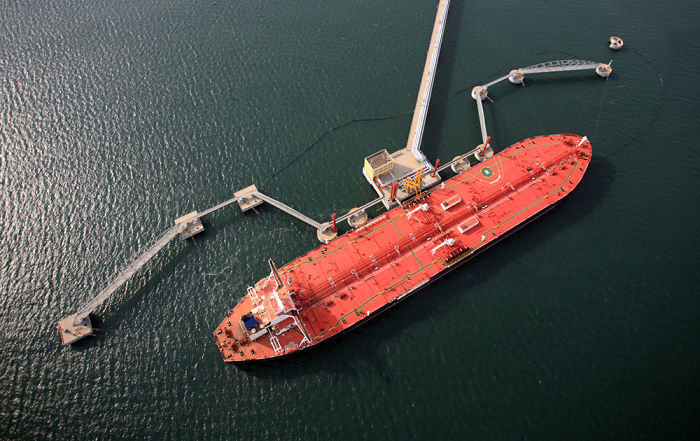 Recently someone asked me this question as to why there are very few new ULCCs? Why most of the ULCCs were built in 70s ? I considered the question to be a topic of one of my blog. This blog is the answer to that question.
Well generally speaking the decision of ordering a particular size of a ship depends upon
1) Technological advancement or feasibility and
2) Economical viability.
There are no problems technologically to build largest crude oil tanker of the world never built but the question is “would it be economically viable?” and the answer is NO.
The economical viability is again dependent on
1) Costs related to transporting a cargo on a route
2) The demand of the cargo
A model of estimated costs to transport per tonne cargo developed from the Evans & Marlow’s model of maritime economics revealed, “ As the route length increases, the larger ships will have lower costs in transporting a unit cargo and there is optimum ship size for a route length”. So for to and fro route length of say 2000 mile, a VLCC would not be an economically viable option but for to and fro route length of 20000 miles, 180000 DWT tanker would be an ideal option.
Another factor that affects the ship size is the demand of the cargo and the ships to carry that cargo (Shipping is a derived demand). The unit costs I talked about earlier is bas...
Recently someone asked me this question as to why there are very few new ULCCs? Why most of the ULCCs were built in 70s ? I considered the question to be a topic of one of my blog. This blog is the answer to that question.
Well generally speaking the decision of ordering a particular size of a ship depends upon
1) Technological advancement or feasibility and
2) Economical viability.
There are no problems technologically to build largest crude oil tanker of the world never built but the question is “would it be economically viable?” and the answer is NO.
The economical viability is again dependent on
1) Costs related to transporting a cargo on a route
2) The demand of the cargo
A model of estimated costs to transport per tonne cargo developed from the Evans & Marlow’s model of maritime economics revealed, “ As the route length increases, the larger ships will have lower costs in transporting a unit cargo and there is optimum ship size for a route length”. So for to and fro route length of say 2000 mile, a VLCC would not be an economically viable option but for to and fro route length of 20000 miles, 180000 DWT tanker would be an ideal option.
Another factor that affects the ship size is the demand of the cargo and the ships to carry that cargo (Shipping is a derived demand). The unit costs I talked about earlier is bas...
Join now to access this article and much more.
Admin has placed this article behind a paywall, making it accessible only with a paid membership, which offers numerous perks:
- Contribute to creating a platform for reading and writing without ads.
- Enjoy all content here, including exclusive articles for members.
- Gain access to all exclusive articles for members.

About Capt Rajeev Jassal
Capt. Rajeev Jassal has sailed for over 24 years mainly on crude oil, product and chemical tankers. He holds MBA in shipping & Logistics degree from London. He has done extensive research on quantitatively measuring Safety culture onboard and safety climate ashore which he believes is the most important element for safer shipping.




Comments (4)