Get unlimited access to the best of MySeaTime for less than ₹100/week. Become a member

Members only

5 Basic Marine engineering Principles Every Deck Officer Must Understand

16
marine-engineering-principle I am sure all seafarers will be on same page when I say seafarers are over occupied with their own work on ship. But if deck officers specially senior officers do not understand the basic marine engineering principles, it can create a communication gap. This communication gap can be critical during emergencies related to engine room. But it can be of great help during engine room related urgencies if deck officers have the basic knowledge of engineering principles. We all would agree that shipping is more commercial these days. In case of engine break down, every one ashore need to have an update every single second. It is of great help if someone other than chief engineer (who will be extremely busy) can communicate with the shore staff. But to do so deck officers need to understand at least the basic engineering principles. So in this post we will discuss at least 5 of such engineering principles. As this post is mainly for the deck officers, I will not go deep into the engineering part. I will just stick to the overview of these principles. Let us start. 1. How an engine works I think this is basic stuff but each deck officer must know the principle of how an engine works. We all have studied this in school physics. In a four stroke diesel engine, engine m...

Join now to access this article and much more.

Admin has placed this article behind a paywall, making it accessible only with a paid membership, which offers numerous perks:

  • Contribute to creating a platform for reading and writing without ads.
  • Enjoy all content here, including exclusive articles for members.
  • Gain access to all exclusive articles for members.

Comments (16)

  • Kadali November 19, 2016
    Dear sir, initially I started reading your Q and A session which are very interesting and with that I started reading your blogs and I really liked. Everday I login to my sea time.com to find new blogs and that how's I landed up reading 5 Basic Principle of Engineering for Deck Officers. I heard the engineering terms used by marine engineers and could not understand what they speaking about, after reading the blog I can proudly say I can join them to support them as deck officer. Hats off to you sir.
    1
    Rajeev Jassal November 19, 2016
    Glad it could be of some help to you Kadali..
  • Nitin singh November 19, 2016
    Excellent article captain saab . It would be great if you could say something about the engine blow through that the engineers do prior departure and what actually happens in that with respect to indicator cocks and all?
    2
    Rajeev Jassal November 20, 2016
    Thanks Nitin.. I will try to cover engine blow through sometimes..
    Rahul Sharma November 21, 2016
    I think engine blow through is done to make sure there is no water leakage from cylinder jacket, No lube oil leakage into liner from a piston and there is no obstruction to any particular unit.
  • Rahul November 20, 2016
    Rajeev nicely written. Keep posting and all the best. Rahul.
    1
    Rajeev Jassal November 21, 2016
    Thanks Rahul..
  • Rahul Sharma November 21, 2016
    Engine blow through is done to make sure there is no water leakage from cylinder jacket. No LO is leaking in to liner from a piston. There is no obstruction for any particular unit.
    1
    Rajeev Jassal November 21, 2016
    Thanks for contributing to it Rahul..
  • Ankith kn December 10, 2016
    Dear sir , recently I have started reading your blog , I have sailed with you in chembulk Savannah as a cadet. I have a few doubt regarding reasons for economizer fire , purifier room fire and what we deck officers do in such situations. Thank you in advance
    1
    Rajeev Jassal December 15, 2016
    Glad to hear from you Ankith.. Hope you are doing good. Economiser is usually because of soot deposits on the economiser coil. Economiser is cleaned by the engine room staff but in case it is not cleaned regularly, soot may deposit on the coil which can catch fire. The first action will be to slow down the engine and depending upon the fire size, it may require to stop the engine. Purifier room deals with purifying the fuel. There may be fuel leakages in the room which can catch fire. Purifier room usually do not require stopping the engine. The first action is to stop the supply of fuel by activating the quick closing valves. If there are specific emergency checklists for these fires, we must follow these checklists for further actions.
  • Aakar singh January 30, 2017
    Sir can you please suggest some book or link which i should read to know more basics about engine terms
    0
  • Kazi August 27, 2019
    Can u explain for pitch test b4 arrival
    0
  • Nikita Spiny November 15, 2020
    This is really cool information! Thank you very much. But is it possible to add information about separators?
    0
  • GAMMA Marine March 18, 2021
    Thank you for providing such great information. Please find the details below for uk certificate of competency ii/i
    0
  • Engineering Courses January 7, 2022
    Great post!! Thanks for posting like this unique and useful information with us. This is really awesome. Thanks for sharing this with us.
    0
Capt Rajeev Jassal

About Capt Rajeev Jassal

Capt. Rajeev Jassal has sailed for over 24 years mainly on crude oil, product and chemical tankers. He holds MBA in shipping & Logistics degree from London. He has done extensive research on quantitatively measuring Safety culture onboard and safety climate ashore which he believes is the most important element for safer shipping.

More like this

In blog, Ship Navigation

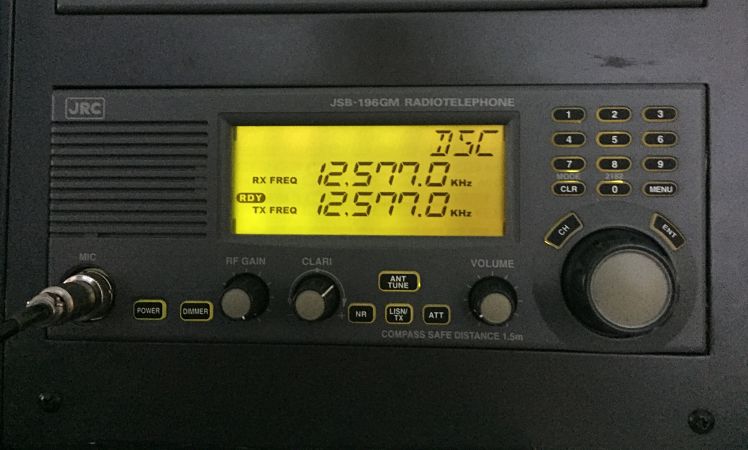
MF/HF Equipment tests: how to do it and actions in case test fails ?

There were days when only radio officers operated radio equipments. Deck officers had nothing to do with the radio equipments.…

In blog, Ship Navigation

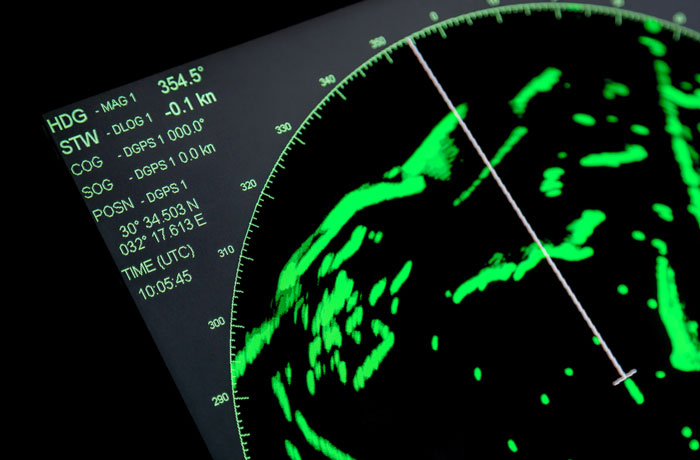
Radar plotting: How to do it and its Significance in Collision Avoidance

Have you been doing radar plotting? I know that the navigators get fed up with this irritating question during third-party…

In blog

Declaring Emergency: Important lessons for seafarers from air crash investigation

Have you been following the news about the disappearance of Malaysian Airline MH370? I am one among millions who agree…

In blog, Ship Safety & Security

What is Risk Assessment and Why it is so Useful On Board ?

Many believe risk assessment is quite boring subject and has nothing to do with reality on board ships. Some also…

In blog, Ship Navigation

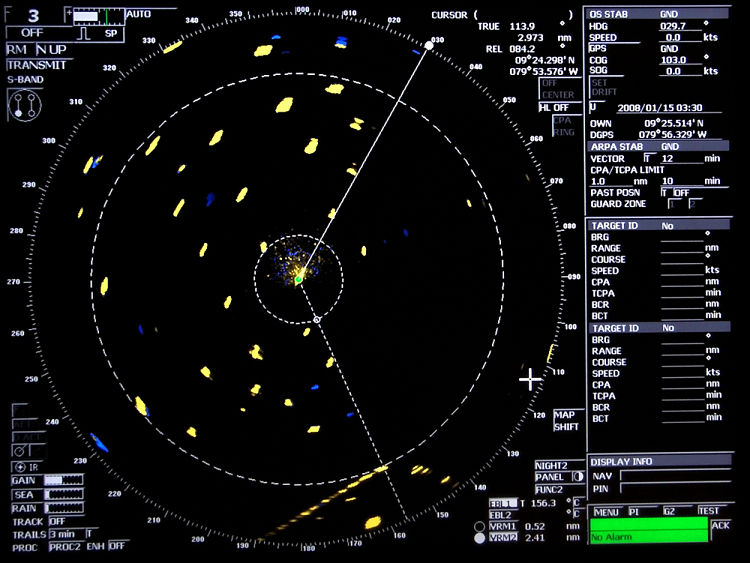
Marine radar: How best to set up to have it plot perfect targets on screen

Radars on board are probably the most used equipment during navigation. It is a good tool for the look out. We…

In blog, Cargo Operation

A complete guide of loading TDI onboard a chemical tanker

TDI is the short form for the toluene Di isocyanate. Loading, carrying, and discharging this cargo is not a child’s…