Get unlimited access to the best of MySeaTime for less than ₹100/week. Become a member

Members only

Here is What a brilliant Passage plan on ECDIS Looks Like

42
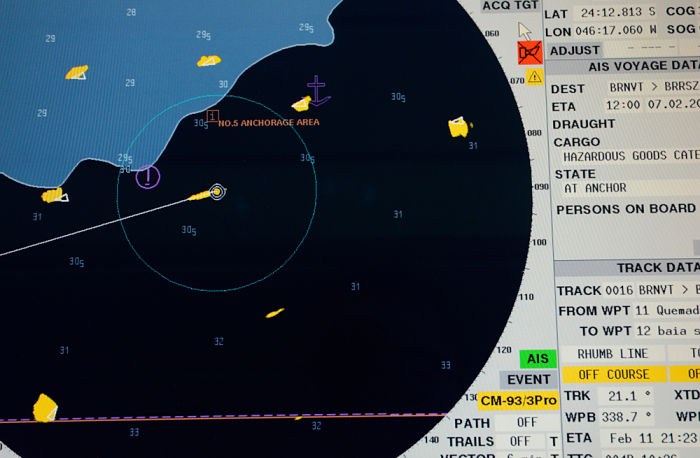
ECDIS passage plan We have come a long way since ECDIS was brought into our lives. In the initial days we were just struggling to keep the ENCs updated on ECDIS. But that is the thing of the past. Most of us know this drill at the back of hands now. And I have covered quite a few of articles on updating and keeping the ENCs up to date. Even during the third party inspections, the inspectors are now focussing on the ECDIS in detail. As even they consider that the period for amateur questions on the ECDIS is over. One of the area that now require detailing is the passage planning on ECDIS. Well, actually there is nothing different in the passage planning on ECDIS. More or less it is same as what we used to do on paper charts. But still it is so much different. In this blog we will discuss the 7 elements which once plotted would make the passage plan on ECDIS stand out. Let us start. 1. Route The first element that you all may have guessed is the route. And when it comes to choosing the route, there is nothing different from what we do even when were using paper charts. We need to find the information from all the publications available. Here is an article that I had written sometime back on using the publications to find the best route to follow. And once we have all the information, we need to us...

Join now to access this article and much more.

Admin has placed this article behind a paywall, making it accessible only with a paid membership, which offers numerous perks:

  • Contribute to creating a platform for reading and writing without ads.
  • Enjoy all content here, including exclusive articles for members.
  • Gain access to all exclusive articles for members.

Comments (42)

  • Alok Singh March 3, 2019
    Sir,GPS positions are plotted for every minute on ecdis hence plotting intervals are normally not marked these days. In case you are referring to radar/visual fixes it needs to be highlighted.
    2
    Rajeev Jassal March 6, 2019
    Plotting interval is not only about plotting of ship's position on ECDIS, it is also about OOW checking if the ship is proceeding as planned. So even if the GPS position is being plotted automatically, PPI need to be mentioned.
    RAHUL December 14, 2020
    Rajeev, that is just a bureaucracy for insurance houses... indeed... so OOW does not have other jobs other to plot the position? OOW is continuosly monitoring the vessel movement through water, this is just additional distract to reduce attention
  • Ivan March 3, 2019
    Great article sir! Nicely explained. One question sir, for position fixing is there a criteria for position fixing with regards to the distance of fixed objects observed visually or by radar? Or what is the maximum allowable distance for fixing position?
    1
    Rajeev Jassal March 6, 2019
    For Visual, as far as eyes can clearly see and take bearing. As Radars are used effectively at 12NM range, the PI can be drawn from objects about 18NM (Considering Radar off center).
  • Earl Jasson March 3, 2019
    Very much appreciated your blogs sir. I hope many experienced seafarers will also impart their vast knowledge as these are very helpful to us, new seafarers! Two thumbs up!
    1
    Rajeev Jassal March 6, 2019
    Thanks Earl...
  • Thirumalar Kannan March 4, 2019
    Thank you so much for your great article. Also tell me wt is to be done when ecdis shows No overlay AIO for some area.
    1
    Jade January 3, 2020
    AIO is basically the computerized version of T&P notices and other navigational warnings, this is where the OOWs diligence in checking received EGC and navtex messages come in. When no AIO overlay is available, be sure to check all sources available for possible warnings and notices in the area, plot them accordingly, file and affix signature. It is the officer's responsibility to exhaust all approved references in keeping ENCs up to date.
  • Adrian Garip March 4, 2019
    Nice article. Regarding the PI topic: what you have plotted on ECDIS is not a PI; it is a kind of user symbol. A PI "travels" together with the vessel. There is the info necessary to set up the Radar display for the respective PI. About the No Go Area topic, the ENC provides sufficient info to inform the user (OOW) that there is an area you must avoid. We may observe the perimeter on chart. There is no need to additionally write "No go". We just need to "interogate" the chart; of course I agree we must write "no go" where the chart doesn't say that and we cannot go into that; for instance a draft restriction ( VLCC case). Very nice and useful article.
    1
    Hamidul Fattah March 19, 2020
    well said
  • Nicholas Stavroulakis March 8, 2019
    Dear Captain, excellent article!! Many thanks.
    1
    YEVGEN October 18, 2022
    YOU ARE SO STUPIED.IF YOU STEALING THE ARTICLE AND SEND IT TO YOUR FLEET,MENTION THE ORIGINAL AUTHOR AT LEAST.AND DO NOT SIGN AFTER LIKE YOU WROTE IT BY YOUSELF.CAPT Rajeev Jassal THIS GUY STOLE YOUR ARTICLES WITHOUT MENTION YOUR NAME.
  • Alex March 13, 2019
    Thx for the great topic! Only few things I would like to clarify: 1. On ECDIS JRC - Wheel Over Line it’s plotted automatically along the route, I mean, we can set turn 1 NM and it will draw. 2. Is it necessary to write to many “no go area “ ? Let’s say for safety contour, ECDIS gives OOW clear info the safe and unsafe water. Yes there are a lot of cases when we have to cross safety contour because of ENC producer/hydrographic office and yes we have to draw warning lines/area to mark our real safety contour which is usually our safety depth and when look ahead will “touch” it
    1
    RAHUL December 14, 2020
    More bullshit you make, more paper work u do, you are more safer in case of vetting... based on 16 yrs of experience
  • baldev Choudhary March 17, 2019
    Sir , Your blogs are very useful onboard and ashore (exams) alike. Waiting for your new blogs as usual. Thanks a lot.
    0
  • LIPIN.M.P March 23, 2019
    Excellent blog sir... This contract i was new to jrc ecdis... I have one query regarding PI on jrc ecdis... How can we monitor PI during our voyage on jrc ecdis... Since in model 901 B Jrc i couldnt find the PI lines available... But on on furuno we had option for that.. . So after drawing PI on usermap how can we monitor effectively when passing close to that object on jrc ecdis...
    2
    Tarun Kumar July 19, 2019
    You do not use PI to monitor Position on an ECDIS. Just like paper charts, PI distances are marked on ECDIS as information to be used for position monitoring by Radar/ARPA.
    Charlie November 24, 2022
    I share the same view as Mr. Kumar but don't know whether our understanding is correct. Can Mr. Rajeev Jassal or any other gentleman confirm to us or leave your comments? The object used as the reference for PI will deviate from the index line on Radar whenever the ship deviates from her course lie. Will the same thing happen also on ENC? If the answer is 'yes' plotting PI on ECDIS makes some sense; otherwise, giving more meaningless workload to OOW only, I guess. You gentlemen's comments are welcome. Thanks a lot.
  • Ramses April 3, 2019
    Great article sir
    0
  • Ramses April 3, 2019
    Great article sir Could you show us also passage plan on Ecdis furuno fmd 3200?
    0
  • Visveswaran May 31, 2019
    hi sir , i do normally get 100s of errors on route check how to tackle the same.
    0
  • OZAN TEKIN June 29, 2019
    Dear Capt Rajeev Jassal, First of all I appreciate with you kind consideration regarding this education articles. I have started to read all of them one by one with caution. Regarding this article as a Second officer who learnt navigation on ECDIS , I want to mention that we need to call 'Position Verification" rather than calling position intervals or fixing anymore. Due to real time navigation option of ECDIS we dont need to think or verify the current ship position continuously. Checking HDOP of GPS every 15 min while doing coastal navigation which can be supported by Radar fixes and PI's will be more than enough to clarify ships position.
    0
  • Sayantan Bera July 16, 2019
    Dear Sir , good question.
    0
  • Mosarof Hossain July 26, 2019
    Dear Sir, thanks for the nice article in this wonderful website. One small thing I would like to mention though. Those sharing options (Fb, tweeter etc.) are overlapping the article and obstructing the view. Would you kindly relocate them?
    0
  • Anil Kumar Singh September 27, 2019
    Very insightful description. However, are the ECDIS units required t be independent of each other? If, so then position fixing and other changes have to be carried out on both separately which takes time and focus away from watchkeeping. If not, then tendency is, not to verify that the other unit is updated accordingly...Pls clarify......
    0
  • jake October 8, 2019
    we could cross safety contours provided we follow methods 1 or 2. it is the safety depth that we need to be wary of.
    0
  • Akhil vikram singh March 16, 2020
    Dear sir Good day This blog is very help full for us thank-you so much sir . Kindly any one may send this blog in PDF on my email ID singh.Akhil627@gmail.com
    0
  • Bogdan Manea April 21, 2020
    Good article sir. Wheel over and turn radius should be taken more into consideration. People forget that they are not escorted by tugboats from port to port and sometimes create passage plans with ROT 40° by not editing turn radius or speed
    0
  • Krishna July 12, 2020
    why it is showing all the time Warning (UNACK:1) Cause: STW and the othere warning is Cause: Position(GPS1) not Differential
    0
  • Krishna July 12, 2020
    (1) Can anyone explain me step by step how to do the monthly back up of ecdis? (2) How to send the test message in SATCOM and also "RCC drill" format . Because when i am sending the test message in the ship email id it showing the status "Delivered" , but really i am not receiving any test message. say how i can solve this issue? please help
    0
  • Allen Ray Pojas September 30, 2020
    Thank you sir. Your blog is very informative and well delivered, also we share same type of ECDIS so it's been a great help. :D
    0
  • Athanasia Andromanetsikou March 12, 2021
    I would like to ask if in the ECDIS can we calculate the great circle route ?
    0
  • Sunny June 6, 2021
    Dear sir i have some queries 1. What is arrival radius in Ecdis and how much we should keep? 2. Shall we keep XTL limits more or less...like for open sea We can keep 1 mile or 0.50 miles also, how to decide what we should keep?? 3. In ECDIS in rta format WOL is already marked but in route with file rtn, arrival radius is given ...so first explain which format we should use and why? And if we use rtn format where arrival radius is given so in that case we nees to mark WOL by user map???
    0
  • Zayn Anderson June 28, 2021
    Shanghai Gebo Packing Machinery Co., Limited is a professional and leading Bag Inserter and Sealing Machine Supplier in China
    0
  • james July 13, 2021
    good day sir! thanks to you better world has made on maritime! it is out of topic! but im so curious about the amended passage planing procedure. all passage plans are have been made berth to berth. what if modifications are made during the voyage? do i have to create all waypoints that already passed before? i think amended passage plan should be made from clsoest waypoint to berth. i cant find any instruction about this on B.P.G, B.T.M. etc... can you tell me where can i find details among the international rules or guidance
    0
  • Rajat Bhardwaj October 17, 2021
    Nice article , thank you sir
    0
  • Johnny December 1, 2021
    Sir, i would like to ask, now i experience that on ecdis the vessel is on course line, but below it indicates that XTD is 1.0nm off Stbd? What do i need to check?
    0
  • Anurag Shukla December 16, 2021
    Hi sir...hope u remeber me...hope u have forgotten me as it has been a very long time...anyways sir...in ECDIS do we still need to plot NLT and NMT...
    0
  • AdiH October 11, 2022
    At point 4. NO GO Areas - correct Shallow Water Contour / Shallow Contour and write Safety Contour to avoid confusions. If you cross Shallow Contour, you are aground. You can cross Safety Contour if you are aware of the Safety Depth.
    0
  • Shiful Islam December 17, 2022
    Dear sir good day, can you please write an article regarding Mandatory and voluntary ships reporting system.
    0
  • MD HARUN OR RASHID April 11, 2023
    Thanks for sharing sir g! Even though it just basic article also fruitful for new beginner
    0
Capt Rajeev Jassal

About Capt Rajeev Jassal

Capt. Rajeev Jassal has sailed for over 24 years mainly on crude oil, product and chemical tankers. He holds MBA in shipping & Logistics degree from London. He has done extensive research on quantitatively measuring Safety culture onboard and safety climate ashore which he believes is the most important element for safer shipping.

More like this

In blog, Ship Navigation

10 ECDIS questions SIRE inspectors ask and how to deal with it?

I cannot tell you how much do I enjoy writing on ECDIS. I truly feel that ECDIS has made the…

In blog, Ship Safety & Security

A Complete Guide to Understand Damage Stability Better

Have you been breaking your head to understand damage stability? Not only this topic is difficult to understand, it is…

In blog, Marine Conventions, Ship Safety & Security

How to Have a More Successful Seafaring Career?

To this date, I have been in command for 10 years 6 months and 20 days. And with that experience,…

In blog, Marine Conventions

Understanding IMO Conventions, resolutions and Circulars

  We all come across so many IMO resolution, conventions and circulars while being in shipping industry. So many that we…

In blog, Cargo Operation

A Basic But Helpful Guide On Framo System

I recently met a 3rd officer. I had a conversation with him about less number of jobs these days for junior officers.…

In blog, Ship Navigation

Speed Through water or speed over ground, Which one to use ?

When it comes to speed over water vs Speed over ground, many of us get confused. May be, it is…