Get unlimited access to the best of MySeaTime for less than ₹100/week. Become a member

Members only

What are the Primary and Secondary means of Venting on tankers ?

88
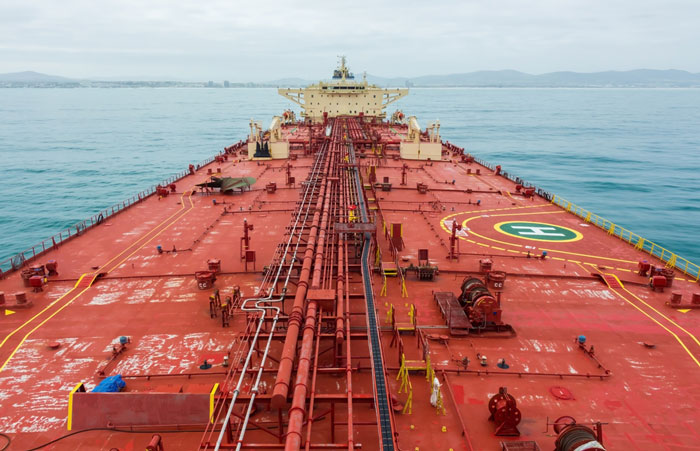
secondary-means-of-venting-on-tankers You know the old expression, "what goes in must come out". It applies to the tankers too, not literally though. During loading of cargo on oil tankers, when the cargo enters a cargo tank, it replaces the air (Or inert gas) inside the tank. Simple physics right ? This air (or inert gas) must be allowed to come out of the tank so that the pressure inside the cargo tank is within limits. Same goes during the unloading of the cargo on tankers. As the cargo is removed from the cargo tank, the void created must be replaced by air or inert gas. The arrangements and system provided on tankers for allowing this air to come out of the cargo tank is called venting system. In this post, I will discuss about the primary and secondary means of venting on tankers. Primary means of Venting As per SOLAS Chapter II-2, reg 11.6.1, The venting arrangements shall be so designed and operated as to ensure that neither pressure nor vacuum in the cargo tanks shall exceed design parameters... This is what the purpose of venting system is all about. So during loading and unloading, how the tanks are maintained at optimum pressure level? Whatever this arrangement is, it becomes the primary means of venting. Let us discuss few of the primary means of venting used on t...

Join now to access this article and much more.

Admin has placed this article behind a paywall, making it accessible only with a paid membership, which offers numerous perks:

  • Contribute to creating a platform for reading and writing without ads.
  • Enjoy all content here, including exclusive articles for members.
  • Gain access to all exclusive articles for members.

Comments (88)

  • Nikolov February 9, 2018
    Very useful info ,Sir ! The way you explain things and make them easy to understand is brilliant. Looking forward to your next articles especially pertaining to tankers .
    1
    Rajeev Jassal March 11, 2018
    Glad you found it useful Nikolov...
  • Abbas Ganjushakkar February 22, 2018
    Interesting and beautifully narrated as usual.
    2
    Rajeev Jassal March 11, 2018
    Thanks, Abbas...
    Samuel Wormenor January 5, 2020
    Very explanatory and simple. Well simplified , structured and educative.
  • Michael Gnanam February 23, 2018
    Nicely explained. Simple and easily understood.
    1
    Rajeev Jassal March 11, 2018
    Glad to hear that Michael...
  • Ivan February 24, 2018
    More articles please capt rajeev. You're the best
    1
    Rajeev Jassal March 11, 2018
    Thanks, Ivan...
  • Hasantha March 22, 2018
    Easy to understand. Thanks sir
    1
    Rajeev Jassal October 14, 2018
    Thanks Hasantha...
  • Jyoti Prakash April 3, 2018
    Dear Sir You have explained very well, but I have a small doubt. If mast riser is considered to be as a primary means of venting then obviously PV valve installed on individual tanks would be considered as secondary means of venting. Still Sire inspector doesn't agree on this and insist installation of individual tank pressure monitoring system although we had PV breaker as well.
    1
    Gurpreet Singh November 13, 2020
    Mast riser can be considered as the primary means of ventilation under one condition when there is no stop valve to the cargo tank. If the stop valve is provided then you need a PV valve for the individual tank as well as a Pressure sensor in the tank. There are very few tankers designed without a stop valve to individual tank.
  • Sergejs April 12, 2018
    Surely inspectors do not like vent mast to be considered as a mean for venting cargo vapours. Mast riser is a past this days. Having all those vapor/gases escaping without high vilosity to the sky, those on deck are exposed to the toxic vapors from crude or other vapors.
    0
  • rubal singh April 26, 2018
    excellent
    0
  • Hemant April 30, 2018
    Thank you sir!!
    0
  • Capt. Roshan Fernando May 9, 2018
    Dear Capt. Rajeeve , you have explained the venting systems on tanker in very detailed and simple .. its very useful for the tanker people .. thanks very much expecting more on tanker operations.
    1
    Rajeev Jassal October 14, 2018
    Thanks Capt Roshan...
  • do diem May 10, 2018
    thank you so much !!!!
    1
    Rajeev Jassal October 14, 2018
    Thanks Diem...
  • do diem May 10, 2018
    would y like explain for me "what is vetting on tanker ship"" because i never working on tanker ship
    0
  • Chirag Karelia May 12, 2018
    Explained very easily..Thanks alot sir.
    1
    Rajeev Jassal October 14, 2018
    Glad you liked it Chirag...
  • amir ali June 4, 2018
    I found this article very informative. https://www.myseatime.com/ is sound valuable site.
    1
    Rajeev Jassal October 14, 2018
    Glad you liked it Amir...
  • Melanie June 7, 2018
    Capt. Jassal: Do you know of any operational offshore vapor emission control systems for the venting emissions from crude oil loading in ULCCs and VLCCs?
    0
  • Ivan Rebersak June 9, 2018
    Dear Capt, I would just correct pressure sensor settings for vacuum side, plus 10% should net be taken literary as we need to keep positive pressure in the tanks at all times, -350 is given as last stand to protect the tanks from damage. Vacuum side should be set to +150mm as on +200 you have first alarm and on +100 your cargo pumps trip. Discussed above with all oil major vettings and accepted it.
    0
  • Daulat Ram June 12, 2018
    Dear sir I am sailing in dry fleet but this clear my many doubts regarding venting .PV valve, mast riser. Thanks
    0
  • Ranjeet kumar June 22, 2018
    Sir, I was always confused with primary and secondary means of venting system. I had also asked many people about it but nobody gave me correct answer. After reading your blog I think I will never get confused with venting system again. Such a good and easy explanation. Thanks a lot
    0
  • CHEM MASTER July 28, 2018
    Pv valves arranged mostly -35/200 mbar . do not afraid when u see -45 when discharging tanks max limit are -70/240 mbar . Companies do not know mostly drop calculation u can even discharge cargo -52 if u calculate the pressure drop capacity by vent pipes also . If your cargo not toxic or reactive air etc keep opening for free discharge nobody can tell u nothing cause tell them first check IBC so i discharge open . Need to clearly identify with ship shore checkist first with loading master . i am Turkish chief officer and 6 years experinece .Be careful exxon terminal they even do not let using plastic drums or unearthed metals for draining cargo manifold disconnectuon . Avoid commingled cargoes at drip tray and use metal drums with earthed to drain the cargo manifolds disconnectuon time . Why we have oil spill drums with if terminals dont allow palstic drums cause of fire possibilities .All ships keeps oil spill drums plastic but terminals want earhed metal for draining so this question for Capt Rajeev Jassal i hope that he replies me
    0
  • CHEM MASTER July 28, 2018
    PLEASE CAPT RAJEEV make a whatssapp group and add me my phone ±380988740142. We can share online to our current problems and worldwide help we can get from our collegues and from yourside also . Thanks and best regards
    0
  • Gela Gogolishvili August 6, 2018
    Thanks Capt.
    0
  • Vikas malik August 21, 2018
    Wonderfull explanation , simple words with good example, really helpfull....
    0
  • Vinay Chouhan August 21, 2018
    Thakyou sir, Your blogs helped a lot in clearing my doubts and getting my coc.
    0
  • Thasama August 29, 2018
    Very useful information. Appreciated for sharing.
    0
  • Zulhilmi August 31, 2018
    How to do maintenance/ inspection on the Mast Riser ? kindly assist. thanks
    0
  • irakli lastakanidze September 19, 2018
    thanks capt. it's really interesting the way how u are explaining , very helpfull...
    0
  • paresh devalia September 20, 2018
    BEST BLOG ON VENTING SYSTEM. THNX FOR THIS USE FULL UPLOAD.
    0
  • Dinesh kumar September 30, 2018
    Really sir... its a very helpful article... the way u explained... excellent!!!!
    0
  • Ehtesham October 6, 2018
    Greetings Capt Rajeev, Appreciate if you can clear my doubt/misunderstanding wrt venting system mentioned in Ship Shore Safety CL, point no.29. Self used to write NA for discharge operation and in comments used to mention Discharge Operation, IG in use. Unfortunately got observation. Donno how to put it across. Still I feel I’m right. Appreciate if you can throw some light. Thanks in anticipation.
    0
  • Rahul shah October 14, 2018
    You really have the skill to teach and explain things in a wonderful manner sir, thank you so much for sharing your knowledge
    0
  • hashan October 25, 2018
    you are never said any single word about the THERMAL VARIATION in a cargo tank. plz describe abt that.. how that will compansate.. because according to SOLAS 11-2 PART C , REGULATION 11 , 6.1.1 vlearly mension abt tht.
    0
  • Madhur December 7, 2018
    Your articles are so lucid yet terse... I always look forward to your articles for any information.. Thanks a lot sir
    0
  • Vangelis December 21, 2018
    Your article captain Rajeev was really useful and helpful for me. Please keep going your nice work, giving the opportunity to other seamen and officers to learn and broaden their knowledge regarding the tanker ship practices.
    0
  • Seiko January 10, 2019
    why do we use mmWG as a unit of measure on board tankers ?
    0
  • George January 15, 2019
    Good day. I'm searching for an answer on following arrangement onboard the vessel I'm working now: PV breaker spit out the liquid at only 2100 mm WG (with 1.07 density of liquid). If the P/V won’t open at designed pressure 2000 mmWG, the alarm set at 2200 mmWG would not have a chance to trigger and by this time the liquid from the breaker will be on deck. Is there any pressure settings correlation (in %) for P/V compared with P/V Breaker? Thank you
    0
  • PRADEEP SAHU January 28, 2019
    Dear sir - ours a bitumen carrier-non inert ed . ( built -2003) with oil tanker Notation . The P-V valves are pressure tested and certified to +1400 MM WG and -700 MM WG . Where as the P-V- Breaker as per Maker designed To +1610 MM WG and -700 MM WG . The negative side of both P-V breaker and P-V valve are coinciding . we slso have pressure sensors for each tank with alarm in CCR. kindly advice on this - weather it is acceptable or not .
    0
  • Gerad Jeyaseelan March 1, 2019
    Very nicely explained. Thank you Sir!
    0
  • leo yang March 11, 2019
    Dear sir, very pleased to read your interpretation of venting arrangment for the tanker. but as per the requirement. how to control small volume in tank due to the thermal variation. If onbard chemical tanker, the arrangement is like this PV +Pressure sensor. , so the small volucme is passed through P/V valve. if onboard cruede oil, the arrangement is master riser +pressure sensor, the samll volume can't pass. do you agree? only master riser + P/V can meet the requirement.
    0
  • 2/O March 12, 2019
    MEPC circular 55 33 states that--- In no case should shutoff valves be fitted either to the individual vents or to the header. in this case meaning mast riser---so sir pls clarify if mast riser can be used as primary means of venting since it has a block valve
    0
  • Mert Sari March 30, 2019
    Dear Rajeev, I have read your article and in my opinion found some errors and omisson. Firstly The design of your P/V valve would be 2000/-350 but it is not the maximum working limits. For example ; Although a P/V valve set to 2000 it is not necessarly need to set to design limit's %10 more because its maximum working limit at your tank's loading limit would be say for instance 2200. If you put 2200 to your secondary alarm limits your tank radar system will warn you at the limit where your PV valves works at their maximum rate. Similarly, When you are discharging a P/V valve would be set to -350 however its maximum vacuum rate for the pump's maximum capacity would be -380. If you set he alarms to -380 mm once again your secondry system will remain at alarm all the time when you are discharging at the maximum rate. Let me hear your response by e-mail. Thanks in advance.
    0
  • Kalyan May 30, 2019
    Sir, you explained so beautifully. Very easy to understand. Thanks Sir, pls give such type of article.
    0
  • Radek June 16, 2019
    Good day, I was trying to find exact regulation saying how often the PV valve shall be tested (correct setting for opening/closing under pressure/vacuum) using appropriate maker test kit. Could you assist?
    0
  • amjad awan July 25, 2019
    a very simple,comprehensive and understandable to the extent that you dnt need to go to other article for same topic.Thanks
    0
  • chief han July 29, 2019
    nicely explained, it was the most wonder of exact explanation of the primary and secondary means of venting system. thank sir.
    0
  • Subrata August 6, 2019
    Simply n clearly explained ,very helpful Thanks
    0
  • Abdulrahman September 2, 2019
    very useful and simply thank you Capt.
    0
  • Tapan Choudhury September 7, 2019
    Excellent.
    0
  • Zahir November 21, 2019
    Excellent Sir You Are Amazing
    0
  • Alok Nachane November 23, 2019
    Thank you for explaining in simple words. I have one question asked by my master on ship. At what pressure will pv valve again sit back after lifting up to release pressure. As per your content you said - after significant pressure drop as per set value of pv valve it will sit back. But is there any specific term for this? What i want to know is when pv valve again sit back after lifting to set pressure?
    0
  • Akshay Karve December 5, 2019
    Hello Sir, Nice writeup. Can you please guide the criteria for setting the PV breaker pressure relief limit. My last ship was calibrated to relieve pressure at 1890 mmwg. I have asked this question to many people without any definite answer. The closest i got was that it is set 10 percent lesser than the tank test pressure. But i want to know as per which regulation or recommendation? Thanks in advance
    0
  • Akshay Karve December 5, 2019
    Hello Sir, Nice writeup. Can you please guide the criteria for setting the PV breaker pressure relief limit. My last ship was calibrated to relieve pressure at 1890 mmwg. I have asked this question to many people without any definite answer. The closest i got was that it is set 10 percent lesser than the tank test pressure. But i want to know as per which regulation or recommendation? Thanks in advance
    0
  • Zaw Win Lwin January 29, 2020
    Thanks You for good explanation sir.
    0
  • Kathleen.Abbott April 16, 2020
    Luck can never last a lifetime
    0
  • Garden.Griffith April 22, 2020
    perseverance can conquer any one **.
    0
  • Garden.Griffith April 22, 2020
    perseverance can conquer any one **.
    0
  • Edison.Lewis April 25, 2020
    Those who have aspirations have thousands of things, and those who have no ambitions only feel that it is difficult
    0
  • Harold.Ingrid April 30, 2020
    perseverance can conquer any one **.
    0
  • Hossain June 28, 2020
    pls provide tank cleaning procedure in detail if u have time
    0
  • Grace.Ingrid July 9, 2020
    65
    0
  • Louisa.Ailsa July 26, 2020
    The smile that has been soaked in tears is the most brilliant, and the soul that comes out of the confusion is the most sober.
    0
  • Subhrajit Banerjee August 5, 2020
    This blog site gives me concept and better understanding during exams or any other conceptual difficulty at all times. Sir with all due gratitude and gratefulness I humbly request you to kindly develop a " MySeaTime " app. Also thank you for this and many other blogs that has already help me and others.
    0
  • Capt. Didarul Alam September 20, 2020
    Dear Sir , good evening, your explanation is very excellent , very easy to understand. A lot of thanks for your hard work. From Bangladesh.
    0
  • Jay Walton Davis September 22, 2020
    The ‘Standards for Owners’ Inspections and Maintenance of Bulk Carrier Hatch Covers’ states that: ‘more attention should be paid to hatch cover securing mechanisms and the issue of horizontal loads, especially with regard to maintenance and frequency of inspection.
    0
  • Capt. Spyridon Grammenos October 22, 2020
    Dear Capt. Your above article was very helpful and comprehensive on the matter. However, my main concern is that if the setting adjusted on 10% more the actuating setting of PV valve then first the PV will activated and after we will have the alarm. I believe that here the OCIMF has a black page..Your commnets on that are highly apprecaited.
    0
  • line pipe protector February 10, 2021
    just now I read your blog. you define this blog is very well. it's very helpful and informative. thanks for sharing this blog with us. well done. keep sharing.
    0
  • Nikhilkhajuria April 26, 2021
    Sir u describe so simple and easy. Which is very easy for everyone to understand thank you
    0
  • Joven Ruthford June 10, 2021
    Great article. https://www.greenleafair.com/air-duct-cleaning-dallas
    0
  • Zachsparrow June 20, 2021
    Very helpful for me sir even I'm not a officer .but hopefully I can use my license someday
    0
  • Ankit Sethi July 13, 2021
    Hello Capt. R. Jassal , I would like to mention that I am sailing as Chief officer on chemical tankers from last 5 yrs or so. I always read your blogs and never commented before .I like to really appreciate your efforts and the way you share knowledge on various topics. Simply admirable and best wishes! Thanks & Regards Ankit Sethi
    0
  • Aiman September 8, 2021
    You always expert in explaining ship materials and operations..many thanks to you captain..shukran
    0
  • The Lac October 11, 2021
    Good day Capt Rajeev Jassal. Thanks so much for your sharing. I got an issue, please help to clarify. I wondering if the ship equipped with the old type PV Valve + Mast Riser still be complied with regulation? As I know the old type PV Valve is no longer being produced and class dit not issue any classification cert for this.
    0
  • Sabahattin Sertçetin November 16, 2021
    Dear Capt. we want to design a set of equipment to calibrate and test the walves if it is working properly. can you adwise us to find a company or people who knows the stadards.
    0
  • Hugo March 16, 2022
    Hi Sir,Can you please explain,if there is a situation that cargo comes out through Mast riser or PV arrangement.What may the reason for it and how can shipboard staff tackle such a situation.
    0
  • Shah June 4, 2022
    Sir I have a doubt. Can mast riser be primary means of venting? Am not sure. May b mast riser. With a breather valve could be. But mast riser alone with mast riser valve without human interference it will not activate. If a ship with mast riser as primary venting whose IG branch forgot to open and a PV valve as secondry venting which unlikely got stuck or jammed will likely to have accident ?
    0
  • Nithin June 10, 2022
    Amazing explanation Sir. Very detailed. Cleared many doubts. Thank You..
    0
  • Capt. Yasser Behiry July 19, 2022
    Dear Capt. Rajeev, That's very informative and simplified at the same time As an old tanker man I really enjoyed it
    0
  • Andrey Tsvetkov January 4, 2023
    I have just been mentioned that there are two methods of supplying inert gas to tanks if inert gas system is broken. The question is what those two methods are.
    0
Capt Rajeev Jassal

About Capt Rajeev Jassal

Capt. Rajeev Jassal has sailed for over 24 years mainly on crude oil, product and chemical tankers. He holds MBA in shipping & Logistics degree from London. He has done extensive research on quantitatively measuring Safety culture onboard and safety climate ashore which he believes is the most important element for safer shipping.

More like this

In blog, Ship Navigation

Position Fixing: The Most Important Element of Passage Planning

Heavy traffic, extra Look out posted, hours of darkness. Suddenly the GPS is gone !!! Ever experienced this ? Believe…

In blog, Marine Conventions, Ship Safety & Security

A Guide to transit through Gulf of Aden and Somalian waters

If you think the piracy and hijacking in the Gulf of Aden is dead now, you need to think again. Yes,…

In blog, Ship Safety & Security

A complete guide of bringing a ship to dry dock

If you have the experience of dry-docking of a ship, you would agree that dry docking is a great experience.…

In blog, Ship Navigation

How to deal with Navigational warnings, A Complete guide

Most of the external agencies consider navigational deficiencies as most serious one. Not only because these can lead to accidents…

In blog, Maritime Law

Incoterms: Guide of everything you want to know about

Incoterms is the short form for International Commercial terms. These terms relates to the sales contract and are used worldwide.…

In blog, Cargo Operation

5 Loadicator tricks that can ease your life during cargo operation

Have you ever imagined our life on board without loadicator? While some intellectuals might find it of no difference to…